For tumbler recommendations, see our best rock tumblers in 2026.
From Passion Project to Paycheck
You’ve been tumbling rocks for months now. Your shelves overflow with polished stones, friends keep asking to buy them, and you’re wondering if you could actually turn this hobby into real income. The good news is yes, you can. The reality check is that moving from casual tumbler to business owner requires more than just nice equipment and patience.
With over a decade of passion for rocks and minerals, I’ve watched plenty of hobbyists make this transition successfully and others stumble because they skipped the operational basics. This guide will walk you through what it actually takes to scale responsibly.
Equipment Investment for Commercial Operations
Your trusty single-barrel tumbler got you this far, but a side business demands different gear. You’ll need to balance increased production capacity with space constraints and budget realities.
Multiple Tumblers vs. Upgraded Single Unit
Most people starting a business ask the same question: should I buy multiple smaller tumblers or invest in one large capacity machine? The answer depends on your space, budget, and target output.
Running two or three mid-range rock tumblers for different budget levels gives you flexibility. You can run different grits simultaneously, which speeds up production. If one breaks, you’re not completely shut down. The downside is noise (your household won’t love three machines running 24/7) and maintenance on multiple units.
A single large-capacity tumbler like industrial models from Lortone or Raytech means one machine to maintain and monitor. But you’re locked into its grit stage, and repairs mean production stops completely. These cost significantly more upfront, typically $800-2000+.
My recommendation for beginners scaling up is two quality mid-range tumblers ($300-400 each). It’s a sweet spot for output without excessive noise or budget strain. Get tumblers with rubber barrels if you value your sanity (and your spouse’s). Lortone QT6/12 or Thumler’s UV-10/18 are the quietest workhorses in that price range.)
Supporting Equipment You’ll Actually Need
Beyond tumblers, expect to invest in infrastructure that hobby tumbling glosses over. You’ll need a dedicated workspace with proper ventilation, water access, and drainage. A wet saw becomes essential for batch processing and customization. You’re looking at another $500-800 there.
Storage for rocks, media, grit compounds, and finished inventory adds up quickly. Industrial shelving runs $200-400. Organization sounds boring but it directly affects your hourly rate when you’re searching for materials constantly.
Don’t skip the scale for weighing grit and media. Consistency in your process is how you deliver consistent quality that customers expect. A decent digital scale costs $30-60.
Operational Workflow and Time Management
Here’s where most hobbyists get blindsided. Your process needs to become repeatable and predictable. That means batching, scheduling, and tracking everything.
Batch Processing vs. Custom Orders
You have two basic business models, and they require completely different workflows. Batch processing means tumbling large quantities of similar rocks on a set schedule. You finish 500 stones every three weeks, customers buy from your existing inventory. It’s efficient but less personal.
Custom orders mean clients specify stone type, finish, and sometimes size. It’s higher margin but demands flexibility. Most successful side businesses actually mix both. Maintain steady batch inventory (your reliable revenue) while taking premium custom orders (your profit multiplier).
Setting a realistic timeline matters. A full tumbling cycle from rough to polish takes 4-6 weeks minimum in a rotary tumbler. Budget an extra week for drying, inspection, and packaging. If you commit to 10 custom orders a month, you need enough capacity and discipline to deliver. Missed deadlines tank your reputation faster than anything.
Tracking Batches and Materials
Start a simple spreadsheet (or use free tools like Airtable) to track every batch: start date, stone type, material costs, barrel used, finish date, and yield. This isn’t just organization, it’s profitability analysis. You’ll quickly see which stones or processes waste time or materials.
Know your material costs per stone. If tumbling agate costs you $1.20 in grit and media, you can’t sell it for $2. As you scale, these small numbers multiply.
Legal and Business Structure
This is the section most passionate tumblers skip, and it’s where things get uncomfortable. But setting yourself up properly protects you and your family.
Business Registration and Licenses
The specific requirements vary drastically by location. In the US, you’ll minimally need an EIN (Employer Identification Number) from the IRS, even if you’re self-employed. It’s free and takes 15 minutes online. This separates your business finances from personal, which your accountant will thank you for.
Most jurisdictions require a business license for any income-generating activity. Cost ranges from $50-500 depending on location and business type. Some areas classify rock polishing as general retail, others have specific provisions. Call your local business licensing office or city hall. They want you to register and will guide you through it.
If you’ll have employees or contractors eventually, payroll taxes become relevant. For now, assume you’re operating as a sole proprietor unless you’re projecting significant revenue.
Liability Insurance
This is non-negotiable if you’re selling to the public. What if someone buys a polished stone and claims it caused injury? Or they resell it and someone gets hurt? Your homeowner’s insurance explicitly excludes business liability.
Product liability insurance for a small tumbling business costs $300-600 annually for decent coverage. It sounds expensive until you face a lawsuit. General liability (covers accidents on your property) adds another $200-400. It’s boring but essential.
Tax Implications
Treating this as a legit side business means reporting income. The good news is business expenses offset revenue. Materials, grit, water, electricity, equipment depreciation, workspace rental, insurance, and tools are all deductible.
You’ll likely file Schedule C (Profit or Loss from Business) with your personal tax return. Keep meticulous records from the start. Separate bank account, save receipts, log mileage for supply runs. This discipline also makes tax season painless instead of chaotic.
State sales tax depends on where you live and where you sell. If you’re selling online, you may owe sales tax in states where you have nexus (physical presence or significant online sales). This changes constantly, so check your state’s guidance annually.
Pricing Strategy That Actually Works
This is where passion collides with math. You can’t just guess a price and hope it covers costs.
Calculate Your True Costs
Start with direct costs: materials (grit, media, rocks), water, and wear on equipment. Add overhead: electricity, workspace, insurance. Then factor in time.
If a batch of 100 stones costs $85 in materials and takes 15 hours of total labor (setup, monitoring, processing, inspection, packaging), that’s $0.85 material plus roughly $2.25 labor per stone (assuming $15/hour baseline). Add 20% for overhead and unexpected expenses. You’re at $3.30 minimum per stone.
But raw price won’t stick. Market research matters. Check what comparable tumbled stones sell for online. Etsy, local gem shows, and specialty retailers will show you what buyers actually pay. Hand-polished cabochons from big vendors sell for $20–80. Premium finishes, rare stone types, and custom sizing command higher prices. Generic smooth agates sell cheaper than banded tourmaline.
Pricing Models for Different Sales Channels
Direct sales (local markets, direct to customer) support the highest margins. You keep 100% minus material costs. Expect 40-60% markup over cost to feel profitable.
Online retail (Etsy, your website) takes 5-15% in platform fees and payment processing. Factor that in. Shipping adds complexity since stones are heavy.
Wholesale (selling to retailers or gift shops) pays 40-50% of retail price. You move volume faster but lower per-unit profit. It’s worth considering once you have consistent supply.
Building Systems for Scale
The difference between a hobby and a business is systems. Repeatable processes let you grow without increasing stress proportionally.
Inventory Management
You can’t sell what you don’t track. Maintain a simple system showing current inventory, sold items, and ongoing batches. Even a spreadsheet works if you update it weekly. This prevents overselling and tells you what to restock.
Set minimum inventory levels for popular items. Don’t let bestsellers run out while you wait for a batch to complete.
Customer Communication
Set clear expectations around turnaround time, customization options, and quality. If a customer orders a 2cm polished tourmaline, you need documented specs for what that means. Size tolerances, finish type, and any imperfections they should expect prevent disputes later.
Use templates for order confirmations, shipping notifications, and customer follow-up. Consistency builds trust.
Quality Control
Your reputation depends on consistent quality. Develop a simple inspection process before shipping. Check for cracks, cloudiness, or incomplete polish. Understanding what causes cloudy or hazy polished rocks helps you catch issues before they reach customers.
Pad like you’re mailing glass. Double-box if necessary, use 2″ bubble wrap or foam peanuts, and always add $1–2 to your price to cover it as customers expect ‘free shipping’ and will pay for it indirectly.
Document defective batches and why they happened. Over time, patterns emerge. Maybe your grit sequence needs adjustment. Maybe you’re overloading barrels. Advanced rock tumbling techniques become your competitive edge here.
Marketing and Customer Acquisition
Amazing rocks don’t sell themselves, especially when you’re starting out. You need visibility without spending like a major corporation.
Local Markets and Shows
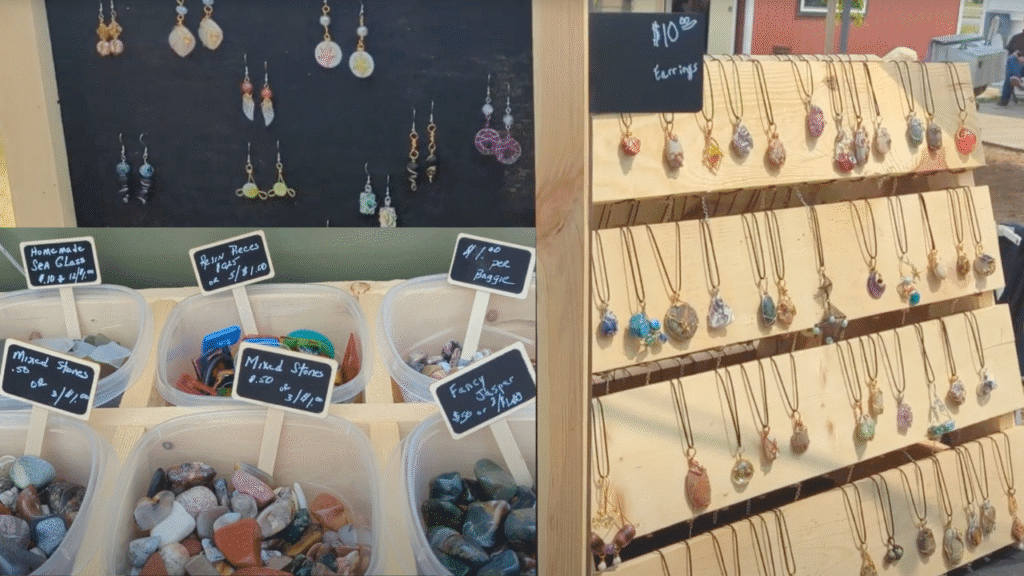
Rock and mineral shows, farmer’s markets, and craft fairs are goldmines for a startup. Booth rental costs $50-200 per event. You get face-to-face feedback, immediate sales, and email list building. The markup on direct sales makes this profitable quickly.
Your display matters. Good lighting shows off polished stones. Clear pricing and simple descriptions help browsers become buyers. Include your contact info and business name on everything.
Online Presence
Etsy is the obvious starting point. Low barrier to entry ($0.20 per listing), built-in audience, and handled payment processing. The 6.5% fee is worth it for beginners. Instagram and Facebook are free visibility tools. Post finished stones, behind-the-scenes tumbling content, and customer photos.
Turn ON ‘vacation mode’ or pause custom orders the moment your tumblers are full. Nothing kills an Etsy shop faster than 1–2 star ‘took too long’ reviews.
A simple website eventually becomes worth building as you grow. Even a basic Squarespace or Shopify setup ($15-30/month) looks more professional than marketplace-only presence.
Scaling Responsibly Without Burnout
The best businesses start as passion projects that stay enjoyable. If you’re tumbling 10 hours a day and hating it, something’s broken.
Start small and grow incrementally. Add a second tumbler only after the first one consistently runs full. Take custom orders only when you have genuine capacity. It’s tempting to say yes to everything, but overcommitting ruins your reputation and sanity.
Don’t reinvest 100% of profits immediately. Take some out. You’re working for this. Budget for equipment upgrades, but balance that against maintaining profitability and enjoyment.
Many successful small rock polishing businesses stay exactly that: small. A few hundred dollars monthly recurring income from something you love beats a stressful full-time gig. There’s no obligation to become a major operation.
Final Thoughts
Scaling your rock tumbling from hobby to side income is entirely doable. You’ve already got the hard part figured out: the actual tumbling skill. Everything else is planning, organization, and following basic business hygiene.
Start with proper registration and insurance. Invest thoughtfully in equipment. Know your costs and price accordingly. Track everything. Be reliable with customers. The rest follows.
Don’t hesitate to experiment with different models and sales channels. What works for someone selling at gem shows might not work for online retail, and that’s okay. Find your groove, hone your skills in rock tumbling and business operations simultaneously, and enjoy the journey.
Happy tumbling, and congratulations on taking this step toward turning your passion into income.