Looking for the most efficient tumbler? Check our best rock tumblers guide for detailed specs and comparisons.
Your rock tumbler runs 24 hours a day, 7 days a week, for a month straight. Maybe longer. So the question hits eventually: how much is this thing actually costing me in electricity?
The short answer? Somewhere between $2 and $11 per month for most hobby tumblers. That’s less than a Netflix subscription. But the exact number depends on your specific tumbler, your local electricity rate, and how many barrels you’re running at once.
I’ve put a kill-a-watt meter on every tumbler I’ve owned, tracked the numbers over full cycles, and compared them against other household appliances. Here’s every number you need, broken down by model, with real measured wattages – not guesses from spec sheets.
How Much Power Does a Rock Tumbler Actually Draw?
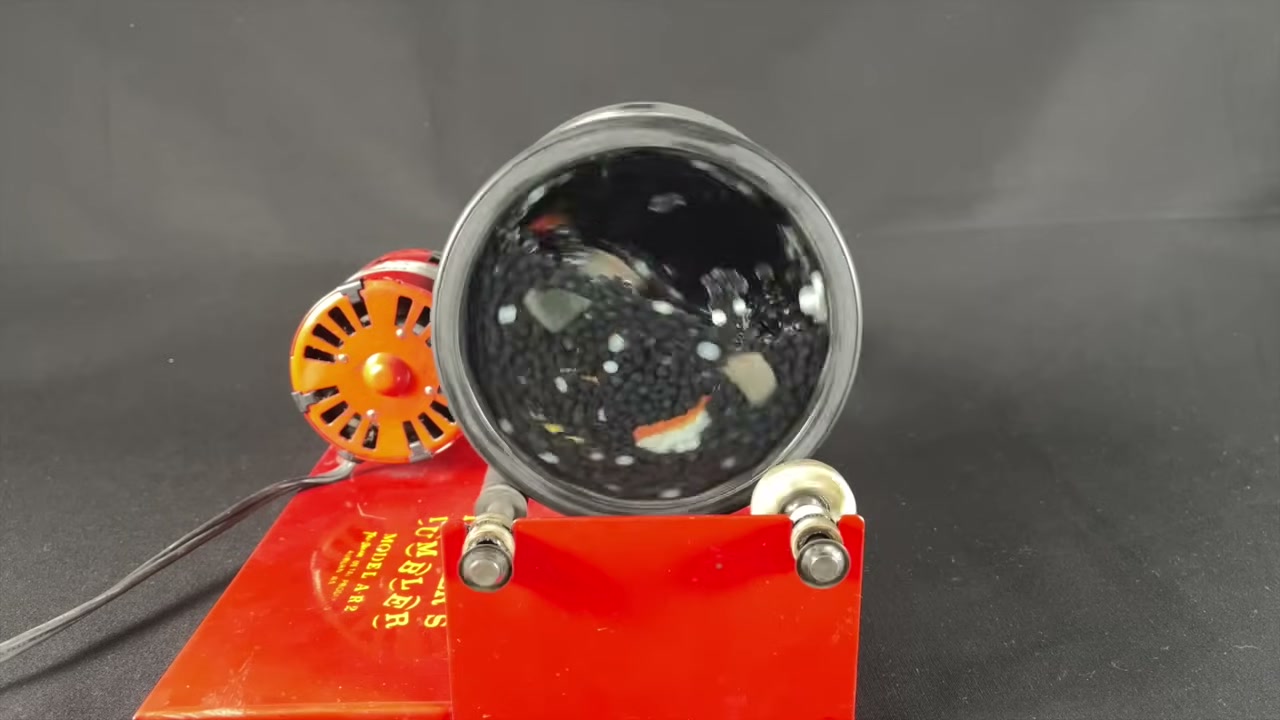
Forget what the box says. Manufacturer specs list maximum or rated wattage, but your tumbler rarely hits that number during normal operation. The motor pulls the most power during startup, then settles into a lower steady-state draw once the barrel is spinning.
The best way to measure actual power draw is with a plug-in power meter (commonly called a kill-a-watt meter) between the tumbler and the wall outlet. Here’s what real measurements show for the most popular models:
| Tumbler Model | Type | Measured Wattage | kWh Per Month (24/7) |
|---|---|---|---|
| National Geographic Hobby | Rotary (single) | 15-20W | 11-14 kWh |
| Lortone 3A / 33A | Rotary (single) | 23W | 17 kWh |
| Leegol 3LB Single Barrel | Rotary (single) | ~25W | ~18 kWh |
| Thumler’s A-R1 | Rotary (single) | ~25W | ~18 kWh |
| Thumler’s A-R2 (double barrel) | Rotary (double) | ~50W | ~36 kWh |
| Leegol 5LB Vibratory | Vibratory | ~75W | ~54 kWh |
| Leegol 18LB Vibratory | Vibratory (large) | ~92W | ~66 kWh |
The math is simple: watts times 720 hours (24 hours times 30 days) divided by 1,000 gives you kilowatt-hours per month. A single-barrel tumbler at 25 watts uses 25 x 720 / 1,000 = 18 kWh per month running nonstop.
Notice the pattern. Small single-barrel rotary tumblers pull 15 to 25 watts. Double-barrel units roughly double that. Vibratory tumblers draw significantly more power because their motors work harder to shake the entire bowl rather than just turning a barrel on rollers.
One thing that affects actual wattage: your household voltage. Standard U.S. outlets run around 120 volts, but actual voltage at the outlet can range from 115 to 125 volts depending on your location, wiring, and time of day. Higher voltage means slightly higher wattage. The difference is usually only 2-3 watts, but it’s worth knowing if your numbers don’t match exactly.
Barrel weight matters too. A full barrel of dense jasper and agate puts more load on the motor than the same barrel half-filled with lightweight material. The heavier the load, the harder the motor works, and the more watts it draws. Always fill your barrel to the recommended two-thirds to three-quarters level for optimal tumbling and reasonable power consumption.
What Does That Actually Cost Per Month?
The U.S. average electricity rate sits around $0.16 per kWh in 2026. But rates vary wildly by state and utility. California averages $0.30 or more per kWh, while states like Louisiana and Arkansas hover around $0.10-$0.12. Your exact rate is on your utility bill – look for the total charges divided by total kWh used (include all fees except the fixed connection charge for an accurate per-kWh cost).
Here’s what the most common tumblers cost to run per month at three different electricity rates:
| Tumbler | At $0.12/kWh (Low) | At $0.16/kWh (Average) | At $0.30/kWh (High) |
|---|---|---|---|
| NatGeo Hobby (20W) | $1.73 | $2.30 | $4.32 |
| Leegol 3LB (25W) | $2.16 | $2.88 | $5.40 |
| Thumler’s A-R2 (50W) | $4.32 | $5.76 | $10.80 |
| Leegol 18LB Vibratory (92W) | $7.95 | $10.60 | $19.87 |
For most people running a single-barrel hobby tumbler, the electricity cost of a full 4-week tumbling cycle is somewhere between $2 and $6. Over an entire year of nonstop tumbling, that’s $25 to $70.
One experienced tumbler tracked their total annual electricity usage across three tumblers running simultaneously – a Lortone 3A, Thumler’s A-R2, and Leegol 18LB Vibratory. The combined annual consumption came to just over 1,000 kWh, costing about $190 for the year. That’s three machines running nearly all year long. For comparison, that’s less than what a water heater uses in the same house.
If you’re on a time-of-use electricity plan (common in California and growing elsewhere), the calculation gets slightly more complex. Since your tumbler runs 24/7, you’ll consume electricity across all rate periods. Figure out what percentage of the day falls in each rate tier, then calculate accordingly. Peak hours typically run 4-8 hours per day at a higher rate, with off-peak covering the remaining 16-20 hours at a lower rate.
How a Rock Tumbler Compares to Other Appliances
The best way to put tumbler electricity costs in perspective is to compare them to things you already run in your house every day:
- LED light bulb (10W): 7.2 kWh/month – $1.15/month
- Phone charger (5W): 3.6 kWh/month – $0.58/month
- Single-barrel rock tumbler (25W): 18 kWh/month – $2.88/month
- Laptop computer (50W, 8 hrs/day): 12 kWh/month – $1.92/month
- Desktop gaming PC (200W, 4 hrs/day): 24 kWh/month – $3.84/month
- Refrigerator (150W average): 108 kWh/month – $17.28/month
- Window AC unit (1,200W, 8 hrs/day): 288 kWh/month – $46.08/month
- Space heater (1,500W, 4 hrs/day): 180 kWh/month – $28.80/month
- Electric dryer (5,000W, 5 loads/month): 25 kWh/month – $4.00/month
A hobby tumbler uses roughly the same electricity as leaving two or three LED bulbs on around the clock. Your refrigerator uses 5 to 6 times more power. That space heater you run in winter uses more electricity in one evening than your tumbler uses in a week.
So if someone tells you their rock tumbler “put their electricity bill through the roof,” they either have a garage full of tumblers or something else changed on their bill at the same time. One tumbler is not going to move the needle on a typical household electric bill.
Vibratory vs. Rotary: Which Uses More Electricity?
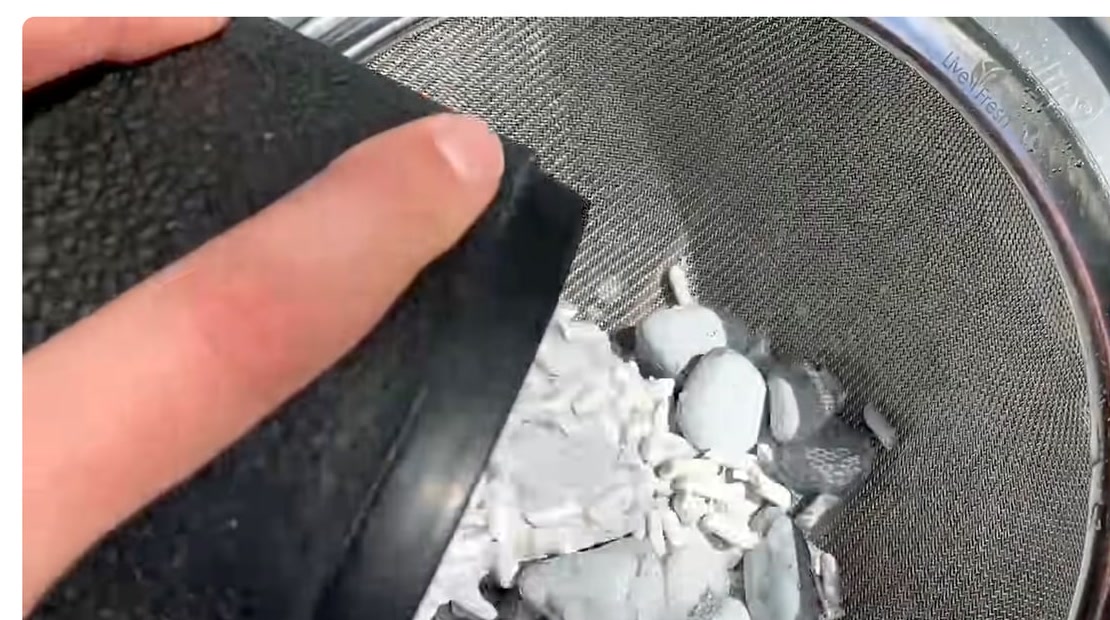
Vibratory tumblers consistently draw more power than rotary models. A typical rotary single-barrel runs at 20 to 25 watts. A similarly sized vibratory unit pulls 50 to 100 watts. The reason is straightforward: a rotary motor just needs to slowly turn rollers, while a vibratory motor has to shake the entire bowl and its contents at high frequency.
But here’s the thing most people miss: vibratory tumblers finish the job much faster. A rotary tumbler takes 4 to 6 weeks for a full four-stage cycle. A vibratory tumbler can do the same work in 1 to 2 weeks, depending on the rock type and starting condition of the stones.
Let’s compare total electricity for one complete cycle:
- Rotary (25W for 30 days): 18 kWh total – $2.88
- Vibratory (75W for 10 days): 18 kWh total – $2.88
The numbers often come out surprisingly close. The vibratory tumbler draws more power per hour but runs for fewer hours total. If speed matters to you and you’re weighing the two options, electricity cost is basically a wash. Choose based on the finish quality and other factors like noise and finish quality instead.
Where vibratory tumblers really pull ahead on the power bill is when you’re doing high-volume tumbling. If you’re processing multiple batches per month, the faster cycle time means you can run fewer machines for the same output. Three rotary tumblers running simultaneously use more total electricity than one vibratory tumbler processing the same volume sequentially.
How to Measure Your Tumbler’s Exact Power Draw
If you want your actual number instead of an estimate, pick up a plug-in power meter. The most popular option is the P3 Kill A Watt meter, which runs about $20 to $30. You plug it into the wall, plug your tumbler into it, and let it run.
The meter will show you:
- Real-time watts being drawn right now
- Cumulative kWh consumed over any time period
- Total estimated cost if you program in your electricity rate
- Voltage and amperage for the curious
This is worth doing if you run multiple tumblers or want to settle arguments about electricity costs. The readings might surprise you – many tumblers draw noticeably less than their rated wattage because manufacturers list peak draw, not steady-state running draw. A tumbler rated at 50 watts might only pull 35 watts during normal operation once the barrel is spinning at full speed.
Let the meter run for at least 24 hours to get a reliable average. Short measurements can be skewed by startup power draw or voltage fluctuations in your house.
Tips to Reduce Your Tumbling Electricity Costs
Honestly? A single rock tumbler costs so little to run that most people shouldn’t worry about it. But if you’re running several machines or you live in a high-cost electricity area like Hawaii or parts of New England, a few strategies help:
- Fill the barrel properly. An underfilled barrel wastes energy tumbling air. Fill it two-thirds to three-quarters full with rocks and ceramic media filler for efficient grinding. The motor works just as hard turning an empty barrel as a full one.
- Use the right grit for the right stage. Don’t run coarse grit longer than necessary. Check your rocks after 5-7 days. Each extra week costs electricity without improving results if the shaping is already done. Learn more about choosing the right grit for each stage.
- Take advantage of time-of-use rates. If your utility offers cheaper electricity at night (many do), your tumbler is already running during those hours anyway. Some hobbyists put their tumbler on a timer to run only during off-peak hours, though this extends the total cycle time significantly and can affect results.
- Maintain your equipment. A worn motor draws more current. Keep bearings oiled and belts tight. A well-maintained tumbler runs more efficiently and lasts longer. A motor that’s struggling pulls more watts and generates more heat.
- Consider a vibratory tumbler for pre-shaped rocks. If you’re starting with rocks that are already roughly shaped (beach stones, for example), a vibratory tumbler finishes faster and may use less total electricity per batch. See our beginner’s guide for more on choosing the right tumbler type.
The Real Cost of Rock Tumbling (Beyond Electricity)
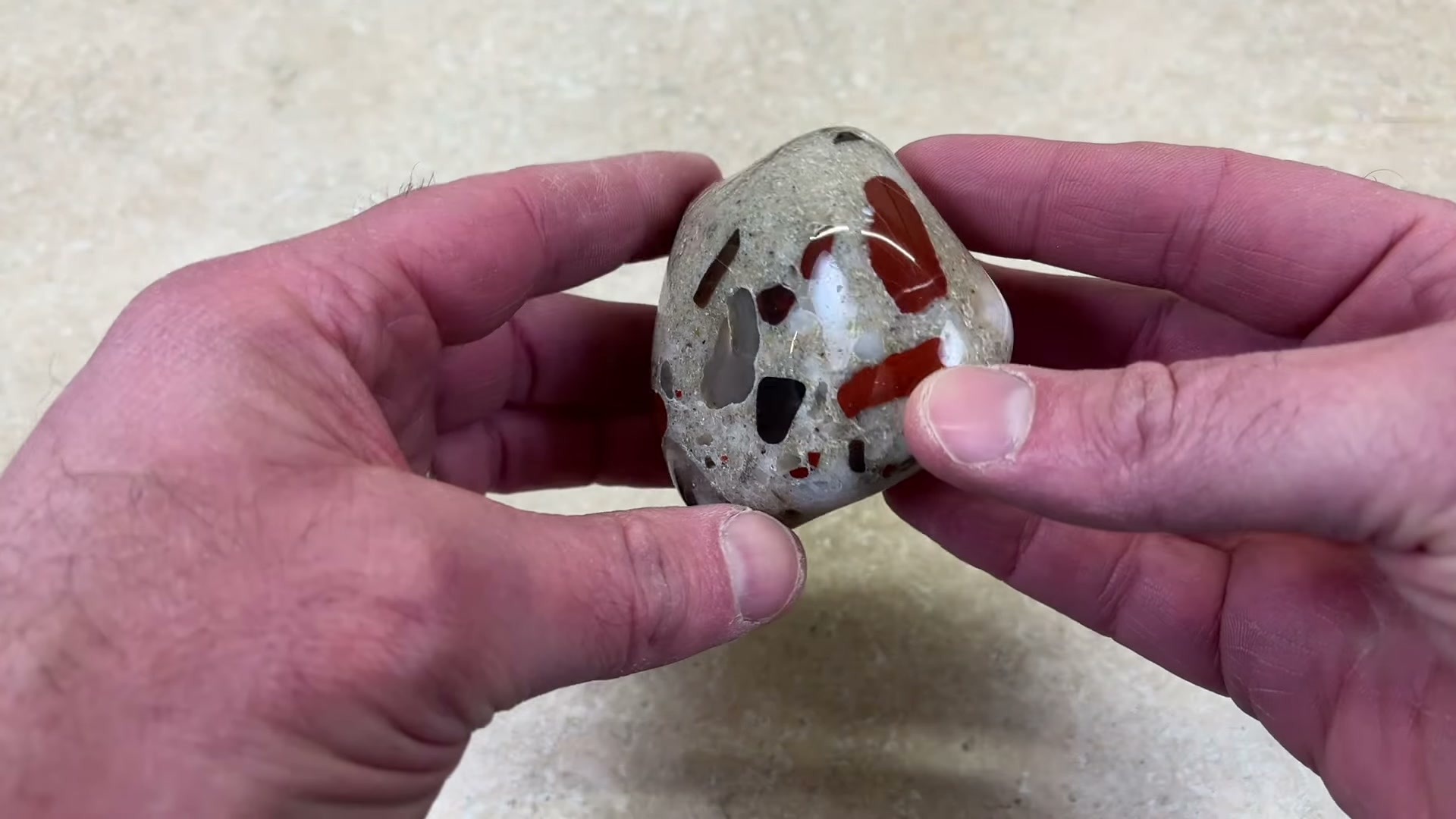
Electricity is genuinely the smallest ongoing cost in this hobby. It’s the one people worry about the most and the one that matters the least. For perspective, here’s what a typical year of active tumbling actually costs:
- Electricity (single barrel, year-round): $25-70
- Silicon carbide grit (all four stages): $40-80
- Replacement barrel: $15-30 every 1-2 years
- Ceramic media filler: $10-20
- Polish compound (aluminum oxide or cerium oxide): $10-15
- Rocks (if buying, not collecting): $20-50
Total annual cost for a single-barrel setup runs about $120 to $265, depending on how many batches you run and whether you buy or collect your own rocks. The electricity portion is typically just 15-25% of that total. If you’re looking to keep costs down, focus on getting the right polish compound and proper grit progression rather than worrying about the power bill.
Can You Run a Rock Tumbler on Solar Power?
Yes, and it’s easier than you might think. A single-barrel tumbler at 25 watts needs about 600 watt-hours per day. A single 100-watt solar panel produces 400-500 watt-hours on an average sunny day (accounting for weather, angle, and efficiency losses). Add a small deep-cycle battery and a basic charge controller, and you’ve got a completely off-grid tumbling setup for around $200-300 in equipment.
Is it practical for most people? Not really. The solar setup costs more than 5+ years of grid electricity for a single tumbler. But if you already have solar panels on your house, running a tumbler during the day is essentially free electricity you’ve already paid for. And if you have an off-grid cabin or workshop where grid power isn’t available, a small solar setup handles a rock tumbler easily.
A few hobbyists have even rigged up tumblers to run in garages and sheds using a dedicated solar panel on the roof. For a 25-watt tumbler, it’s one of the easiest solar projects you can do since the power requirements are so modest.
Frequently Asked Questions
Does a rock tumbler use a lot of electricity?
No. A typical hobby rock tumbler uses 15-25 watts, about the same as two or three LED light bulbs. Running one 24/7 for a month costs $2-$6 depending on your local electricity rate. It’s one of the lowest-draw appliances you can run continuously.
How much does it cost to run a rock tumbler for a month?
At the U.S. average electricity rate of $0.16/kWh, a single-barrel rotary tumbler costs about $2-$3 per month. A double-barrel model runs $5-$6. Even in expensive electricity markets like California ($0.30+/kWh), a single barrel tops out around $5-$6 per month.
Will running a rock tumbler raise my electricity bill noticeably?
For a single tumbler, probably not enough to notice. It adds roughly $3/month to your bill, which gets lost in normal usage fluctuations from weather, cooking, and other activities. If you’re running 3-4 tumblers simultaneously, you might see an extra $10-$20 per month.
Should I unplug my tumbler to save electricity?
Don’t interrupt a tumbling cycle to save electricity. Stopping and restarting mid-cycle can cause uneven results, scratching, and you’ll likely end up running the cycle again – using more electricity total. The savings from interrupting a cycle are measured in pennies. Consistent, uninterrupted running produces the best results every time.
Is a vibratory tumbler cheaper to run than a rotary?
Per hour, no – vibratory tumblers use 2-4 times more electricity than rotary models. But per completed batch, they’re often similar because vibratory tumblers finish faster. A vibratory unit at 75W for 10 days uses about the same total kWh as a rotary at 25W for 30 days.