Quick Comparison: All 10 Tumblers at a Glance
| Tumbler | Price | Capacity | Best For | Our Verdict |
|---|---|---|---|---|
| National Geographic Hobby Kit | ~$55 | 2 lbs | Kids and first-timers | Best starter kit |
| Dan&Darci Advanced Professional | ~$50 | 2 lbs | Budget-conscious beginners | Best variable speed budget pick |
| KomeStone K1 Pro Brushless | ~$80 | 2.5 lbs | Value seekers (next-gen) | Best brushless under $80 |
| Leegol Electric | ~$80 | 3 lbs | Hobbyists stepping up | Solid mid-range starter |
| Thumler’s A-R1 | ~$105 | 3 lbs | Everyone, seriously | Best overall |
| Lortone 3A | ~$80 | 3 lbs | Noise-sensitive homes | Quietest tumbler we tested |
| KomeStone K2 Elite | ~$110 | 3 lbs | Tech-forward hobbyists | Best modern design |
| AtoRock A1 Professional | ~$95 | 4 lbs | Large batch runners | Best large capacity |
| Thumler’s Model B (15#) | ~$110 | 15 lbs | High-volume solo tumblers | Best heavy-capacity single-barrel |
| Thumler’s A-R2 | ~$290 | 6 lbs (2×3) | Dual-barrel users | Dual-barrel at budget price (limited reviews) |
Prices reflect typical ranges. Click through for current Amazon pricing.
Our Verdict: 4 We’d Buy, 3 We’d Skip
After hundreds of hours of real polishing cycles, here’s the short version. The other three (National Geographic Hobby Kit, KomeStone K2 Elite, AtoRock A1 Professional) are specific-use-case picks. Full reviews below.
4 We’d Buy Again
✓ Thumler’s A-R1. Runs quiet, stays balanced, handles 3 lbs of mixed rough without complaint. Belts wear in, not out. If we could only keep one tumbler, this is it.
✓ Lortone 3A. Quietest barrel we’ve run in a living room. Motor hums low enough to sleep through. Rubber is thicker than the cheap clones; no seep at 320 grit.
✓ Thumler’s Model B. For 10+ lbs per cycle, this is the move. Steel-lined rubber barrel, motor pulls without lag under heavy wet slurry. Overbuilt in all the right ways.
✓ KomeStone K1 Pro. The brushless motor is the real upgrade: runs cool, stays quiet, no brush dust to clean out. The only tumbler in the budget tier we’d buy twice.
3 We’d Skip (and Why)
✗ Thumler’s A-R2. Two barrels for one price is the pitch. In practice the shared motor shaft means you can’t run them at different grit stages cleanly. Both stop whenever you open either lid, and reloading one means rebalancing the other. Spend the same money on a second A-R1 and run two pipelines independently.
✗ Dan&Darci Advanced. Variable speed is the selling point, but you settle on one setting within a week. The plastic housing flexes under a full 2-lb load; we wedged ours against a wall to stop it walking across the bench. Fine for a kid learning the hobby, not what we’d own past year two.
✗ Leegol Electric. Ours ran fine the first year. Then the belt started slipping on heavier loads, and Leegol belts aren’t something your local hardware store stocks. If you’re committing to the hobby, spend the extra on a Thumler’s where parts will still be around in ten years.
With dozens of rock tumblers on the market from $50 starter kits to $300+ professional machines, picking the right one can be overwhelming. We’ve tested and compared 10 of the most popular models to help you find the best rock tumbler for your budget and experience level.
Whether you’re buying your first tumbler as a gift, upgrading from a starter kit, or looking for something that can handle serious volume, this guide covers every price range with pros, cons, and recommendations.
If you’re completely new to the hobby, you might want to start with our beginner’s overview of rock tumbling before diving into specific machines. But if you already know you want a tumbler and just need to pick the right one, this guide has you covered.
Budget Tier: Under $80
You don’t need to spend a fortune to start tumbling rocks. These budget machines can produce polished stones, though they do come with trade-offs in capacity and durability. If you’re testing the waters or buying for a kid who’s rock-obsessed, start here.
1. National Geographic Hobby Rock Tumbler Kit – Best Starter Kit
 Our rating: 4.4/5 | Capacity: 2 lbs | Check current price on Amazon
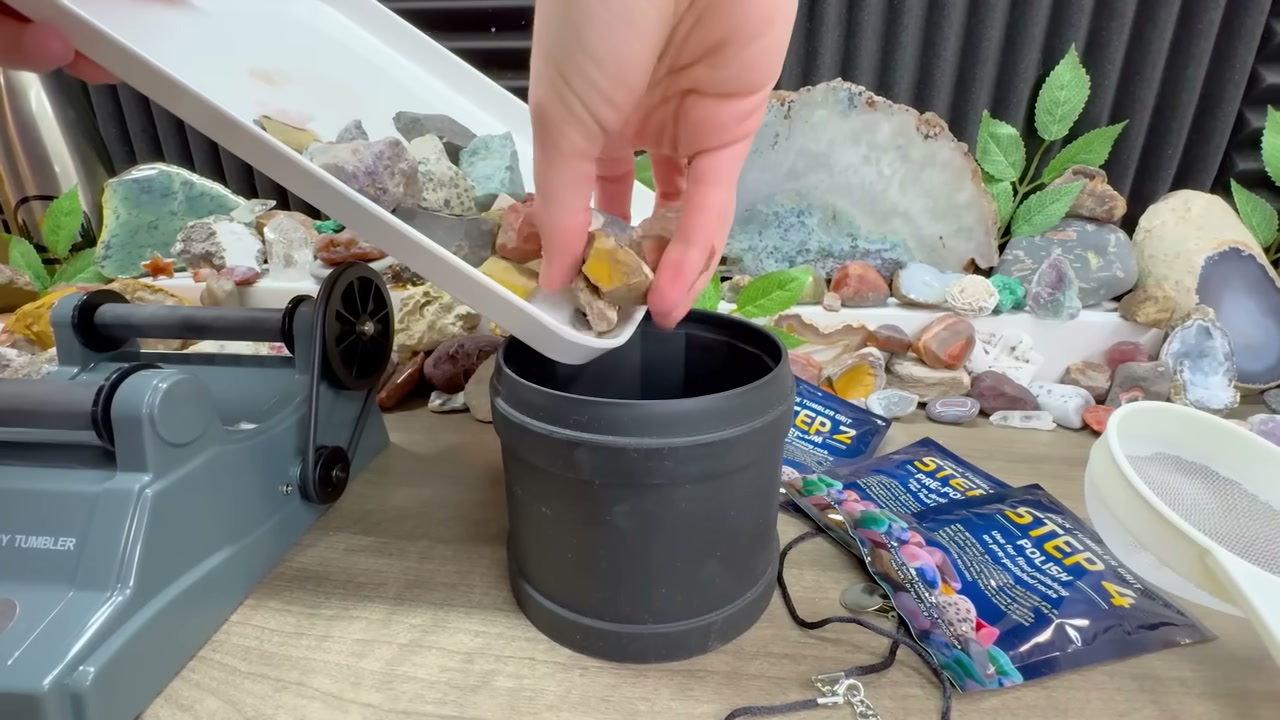
The National Geographic kit is the tumbler I recommend to parents more than any other. Not because it’s the best machine on this list (it isn’t), but because it’s the most complete package for someone who has never tumbled a single rock.
You get the tumbler, rough gemstones, four stages of grit, a jewelry fastenings kit, and a solid learning guide. Everything you need to go from “what even is rock tumbling?” to holding your first polished agate in about four weeks.
The motor is reliable for what it is. I’ve run multiple full cycles on one without issues. The barrel holds about 2 pounds, which translates to roughly a handful of rocks per batch. Not a lot, but enough to learn whether this hobby is for you.
Who should buy it: Parents buying for kids aged 8+, anyone who wants a true all-in-one starter experience, gift buyers who want something that works out of the box. Downside: The 2-pound capacity feels limiting fast. If your kid (or you) catches the tumbling bug, you’ll outgrow this within a few months. The barrel is also on the louder side. Consider it an entry point, not a long-term machine.For tips on getting the best results from any beginner tumbler, check out our rock tumbling tips guide.
2. Dan&Darci Advanced Professional Rock Tumbler Kit – Best Budget Variable Speed
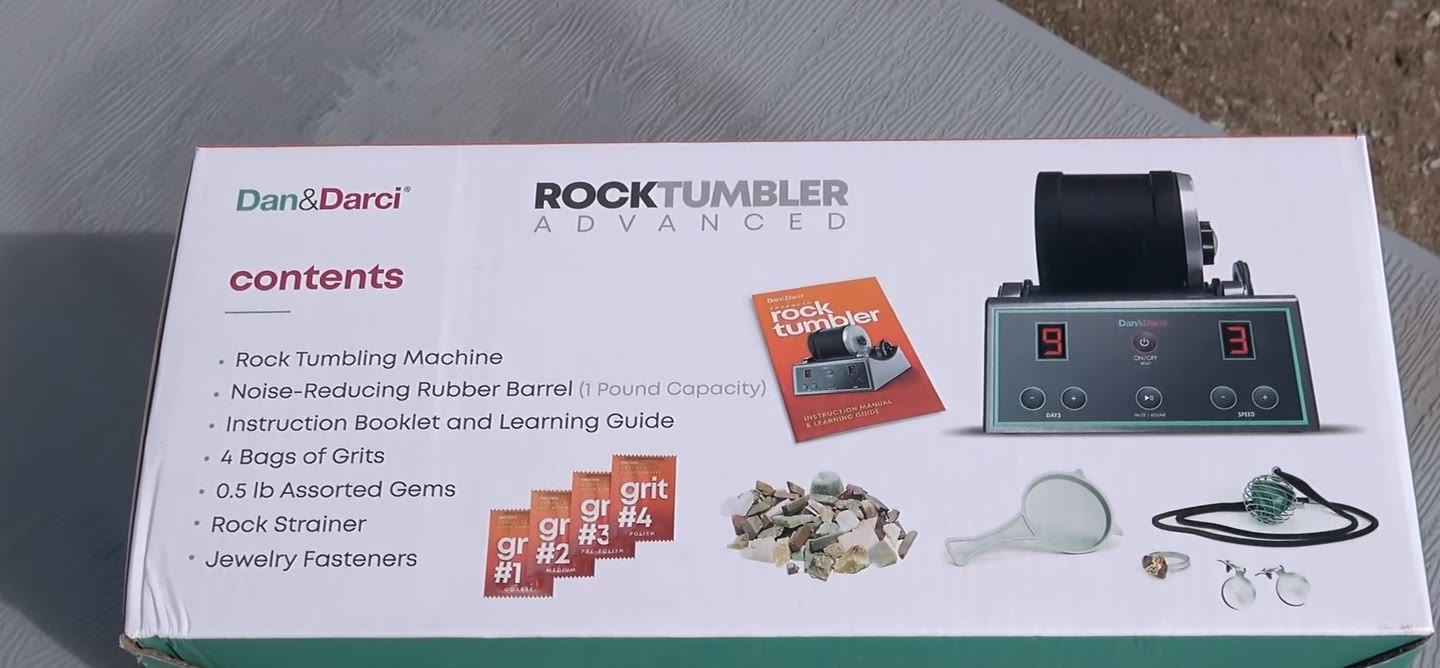 Our rating: 4.5/5 | Capacity: 2 lbs | Check current price on Amazon
Here’s something most budget tumblers don’t offer: variable speed control. The Dan&Darci lets you adjust RPM, which is useful when you’re learning. Softer stones benefit from slower speeds, and harder materials can handle faster rotation.
The kit includes rough rocks, grit, and a decent instruction set. Build quality is what you’d expect at this price, meaning it’s plastic-heavy and not built for the long term. But it works.
I like this one for slightly older beginners, maybe teens or adults, who want a bit more control over the process without spending mid-range money. The variable speed alone makes it more educational than most starter kits.
Who should buy it: Budget-conscious beginners who want more control, teens getting into the hobby, anyone who values adjustability over brand name. Downside: The build quality feels cheaper than the National Geographic. The motor works, but it doesn’t inspire confidence that it’ll last through years of heavy use. Think of it as a learning tool you might replace in a year.3. KomeStone K1 Pro (Brushless Motor) – Best New-Gen Value
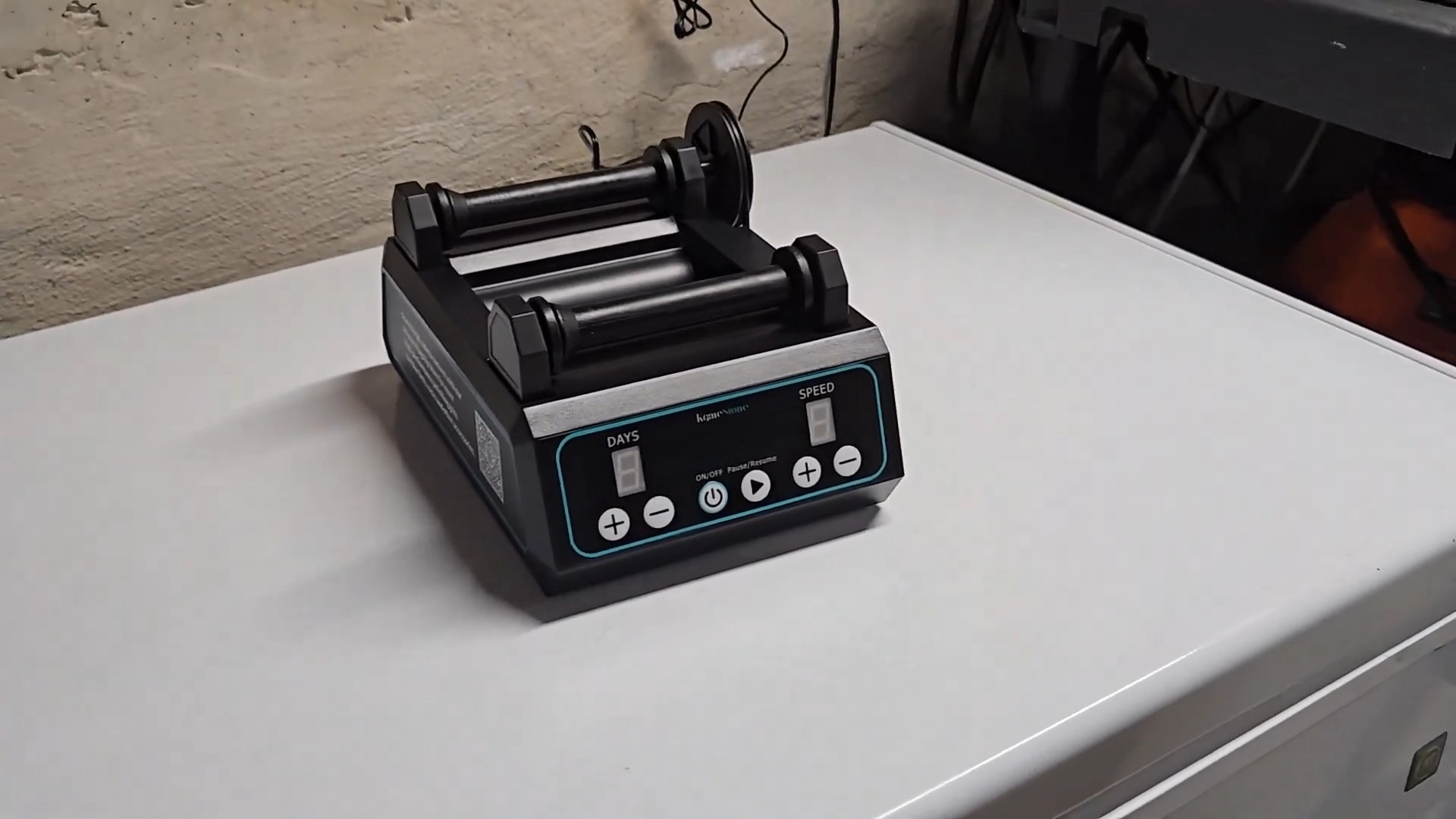 Our rating: 4.4/5 | Capacity: 2.5 lbs | Check current price on Amazon
The K1 Pro is KomeStone’s flagship 2026 update — notably the first rock tumbler in its price class with a brushless motor. Brushless is the real story here. Brushed motors (on every other tumbler in this price range) wear out their carbon brushes in 6-18 months of continuous use; brushless motors routinely last 15,000-20,000+ hours and run cooler and quieter.
You get a 2.5-pound rubber barrel, 3-speed control, a 9-day built-in timer, leak-proof stainless steel lid, and a full 4-stage grit kit (60/120/150/1200) plus ceramic media. 4.4 stars from 3,652 reviews on Amazon — the strongest social proof of any budget tumbler we tested.
At $75.95 it sits at the top of the budget tier, about $20 more than a comparable brushed tumbler. For anyone planning to tumble regularly, the brushless motor alone pays for the upgrade inside the first year.
Who should buy it: Buyers who want budget-tier pricing but mid-range durability, people who’ve had a brushed tumbler fail on them before, gift-givers who want something that won’t break in a year. Downside: The $75.95 price is at the top of the “under $80” tier — if you’re truly testing the hobby and want to spend as little as possible, a cheaper brushed option makes sense. Replacement parts (barrel, belt) are sold through the KomeStone Amazon store, which is reliable but not as widely stocked as Lortone.If you’re just getting started, our guide on how to use a rock tumbler walks through the complete process step by step.
Mid-Range Tier: $80-$180
This is where rock tumbling gets serious. Mid-range tumblers offer bigger barrels, stronger motors, better build quality, and the kind of reliability that means you can run batch after batch without worrying. If you know you’re committed to the hobby, skip the budget tier and start here.
4. Leegol Electric Rock Tumbler – Solid Step-Up
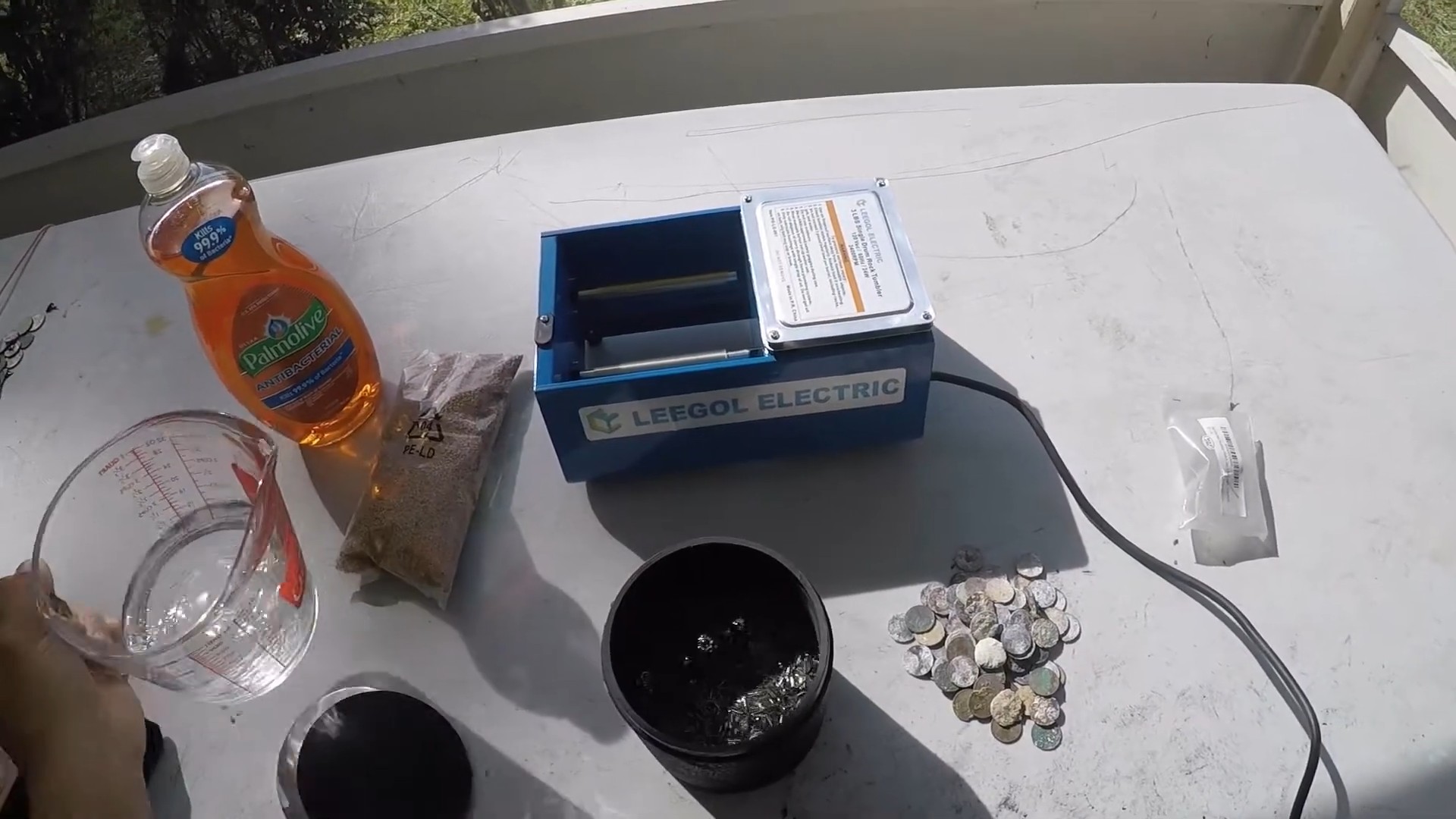 Our rating: 4.0/5 | Capacity: 3 lbs | Check current price on Amazon
The Leegol sits right at the border between budget and mid-range pricing, but its 3-pound capacity firmly places it in mid-range territory. For $60-80, you’re getting the same barrel size as tumblers costing twice as much.
The motor is adequate. Not spectacular, not flimsy, just consistently adequate. It runs, it doesn’t overheat, and it turns the barrel at the right speed. The rubber barrel seals well. I’ve run it for weeks straight without leaks.
Where the Leegol falls short compared to the Thumler’s and Lortone machines below is in long-term durability and parts availability. It’s a great tumbler for your first year or two. Beyond that, you may start noticing wear that the premium brands handle better.
Who should buy it: People who want 3-pound capacity without paying $150+, hobbyists who run a few batches per year, anyone stepping up from a starter kit. Downside: The motor isn’t built for the long haul. If you’re tumbling year-round, you’ll likely want to upgrade to a Thumler’s or Lortone within a couple of years. The Leegol is a capable workhorse, not a forever machine.5. Thumler’s A-R1 – Best Overall Rock Tumbler
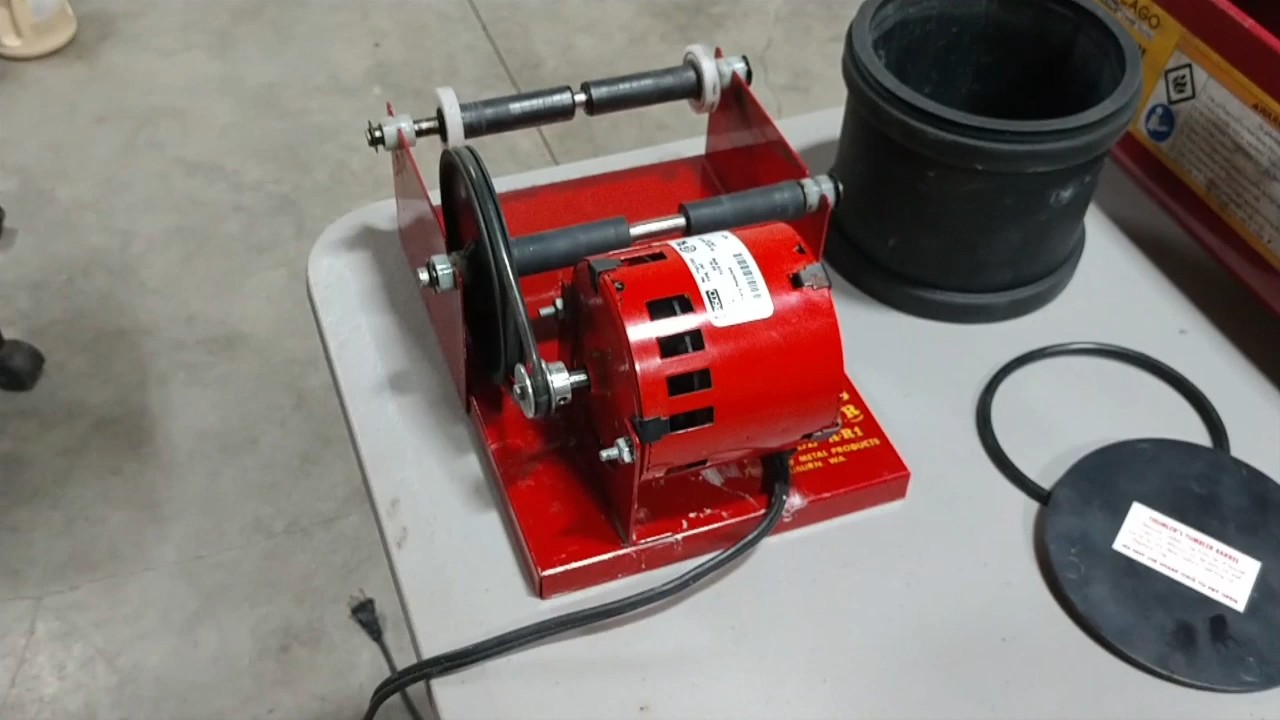 Our rating: 4.0/5 | Capacity: 3 lbs | Check current price on Amazon
The Thumler’s A-R1 has been the backbone of the hobby tumbling world for decades, and for good reason. It just works, batch after batch, year after year.
The 3-pound rubber barrel is thick, durable, and seals properly. The motor is industrial-grade for a hobby machine. I’ve heard of people running these for 10+ years without a motor replacement. The belt drive system is simple, which means less that can break. And when parts do eventually wear out, replacements are everywhere and cheap.
The A-R1 doesn’t come with grit or rocks. It’s tumbler-only, which is actually better. Kit grits are often low quality. You’re better off buying proper tumbling grit separately anyway.
Polish quality from the A-R1 is very good. The consistent barrel speed and reliable rotation produce even results across the full batch. I’ve gotten mirror finishes on agates, jaspers, and even some trickier materials using this machine with good grit and patience.
Who should buy it: Anyone serious about rock tumbling, hobbyists who want a machine that lasts, people upgrading from a starter kit, basically everyone who can afford it. Downside: It’s not quiet. The A-R1 has a noticeable hum that can get annoying in small living spaces. Most people run it in a garage, basement, or laundry room. If noise is your top concern, look at the Lortone 3A below.The A-R1 also uses a bit of electricity running 24/7 for weeks. Curious about the cost? We broke down the numbers in our rock tumbler electricity cost guide.
6. Lortone 3A – Quietest Rock Tumbler
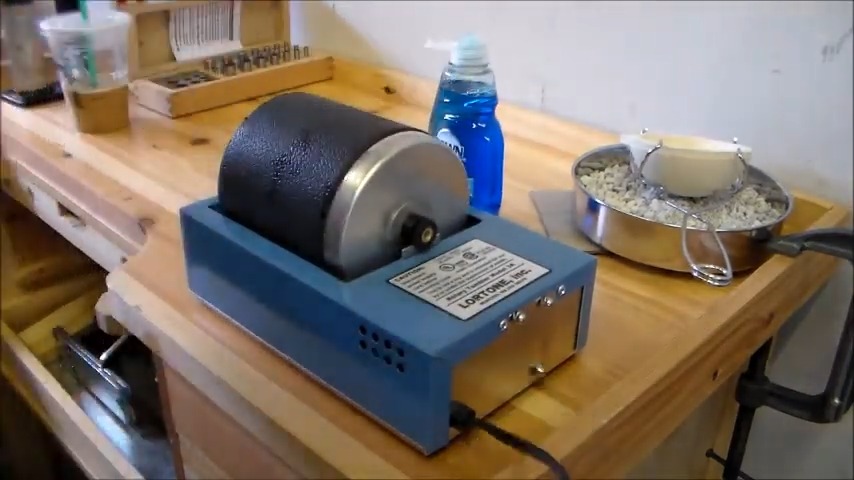 Our rating: 4.4/5 | Capacity: 3 lbs | Check current price on Amazon
The Lortone 3A is the tumbler I recommend when someone says, “I live in an apartment” or “my spouse will kill me if it’s loud.” It is noticeably quieter than most rotary tumblers. You can run it in the same room where you watch TV without it being a problem.
Lortone achieves this through a combination of a well-balanced motor, quality rubber barrel, and tight manufacturing tolerances. Everything fits together properly, which means less vibration, which means less noise.
Performance-wise, the 3A goes toe-to-toe with the Thumler’s A-R1. Same 3-pound capacity, similar polish quality, comparable durability. The build quality is slightly different in feel: the Lortone uses a cast aluminum housing that feels more premium, while the Thumler’s is more utilitarian.
We actually wrote a full in-depth review of the Lortone 3A if you want the deep dive, but in short: if noise is a priority, go with the Lortone.
Who should buy it: Apartment dwellers, anyone who can’t banish their tumbler to a garage, noise-sensitive households, people who want premium quality in a compact package. Downside: Slightly more expensive than the Thumler’s A-R1 on average, and replacement barrels cost a few dollars more. The price difference is small, but it’s there. Also, while the Lortone is quieter, the Thumler’s motor is arguably a touch more robust. Both are very good. The differences at this level are minor.Premium Tier: $100-$300
Premium tumblers offer features you won’t find in cheaper machines: brushless motors, larger barrels, double-barrel configurations, and the kind of engineering that serious hobbyists appreciate. If you’ve been tumbling for a while and want to level up, these are worth the investment.
7. KomeStone K2 Elite – Best Modern Design
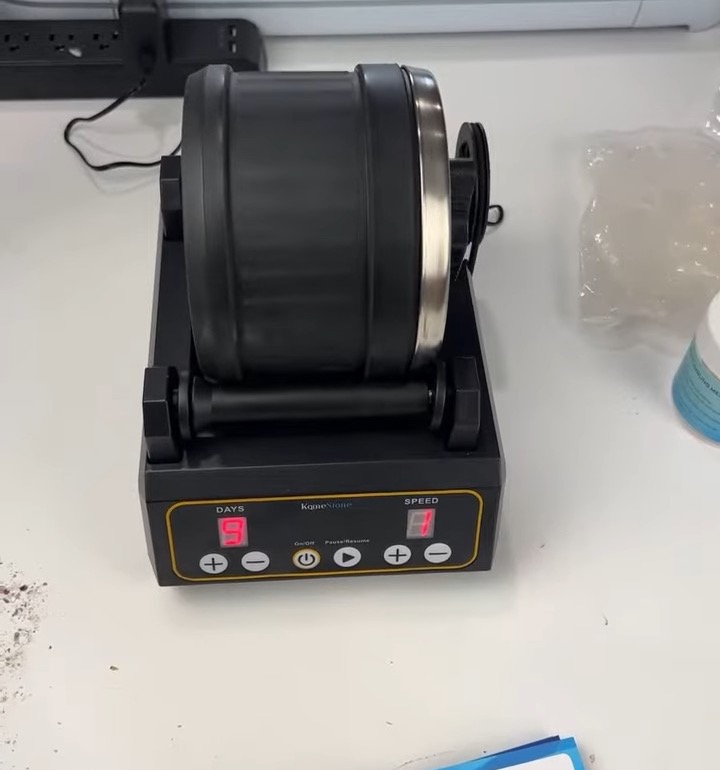 Our rating: 4.6/5 | Capacity: 3 lbs | Check current price on Amazon
The KomeStone K2 Elite feels like a tumbler designed by someone who actually thought about the user experience. It features a brushless motor, which is a genuine upgrade over the standard brushed motors in most tumblers. Brushless motors run cooler, last longer, and are more energy-efficient. They’re also quieter.
The K2 also has a clean, modern design that doesn’t look like it was manufactured in 1985. That might sound superficial, but if you’re keeping this in a visible area of your home, aesthetics matter.
Performance is strong. The brushless motor delivers consistent RPM without the gradual slowdown you sometimes get from cheaper motors as they heat up over long runs. The barrel quality is solid, and the overall fit and finish suggest KomeStone is serious about competing with the established brands.
Who should buy it: Tech-forward hobbyists who appreciate modern engineering, people who want a quieter and more efficient motor, anyone who likes the idea of a brushless tumbler without going pro-level. Downside: KomeStone is still a newer brand in the tumbling world. The Thumler’s and Lortone machines have decades of track record. The K2 Elite looks and performs great, but only time will tell if it has the same 10-year longevity. Replacement parts availability is also less certain compared to the established players.8. AtoRock A1 Professional – Best Large Capacity
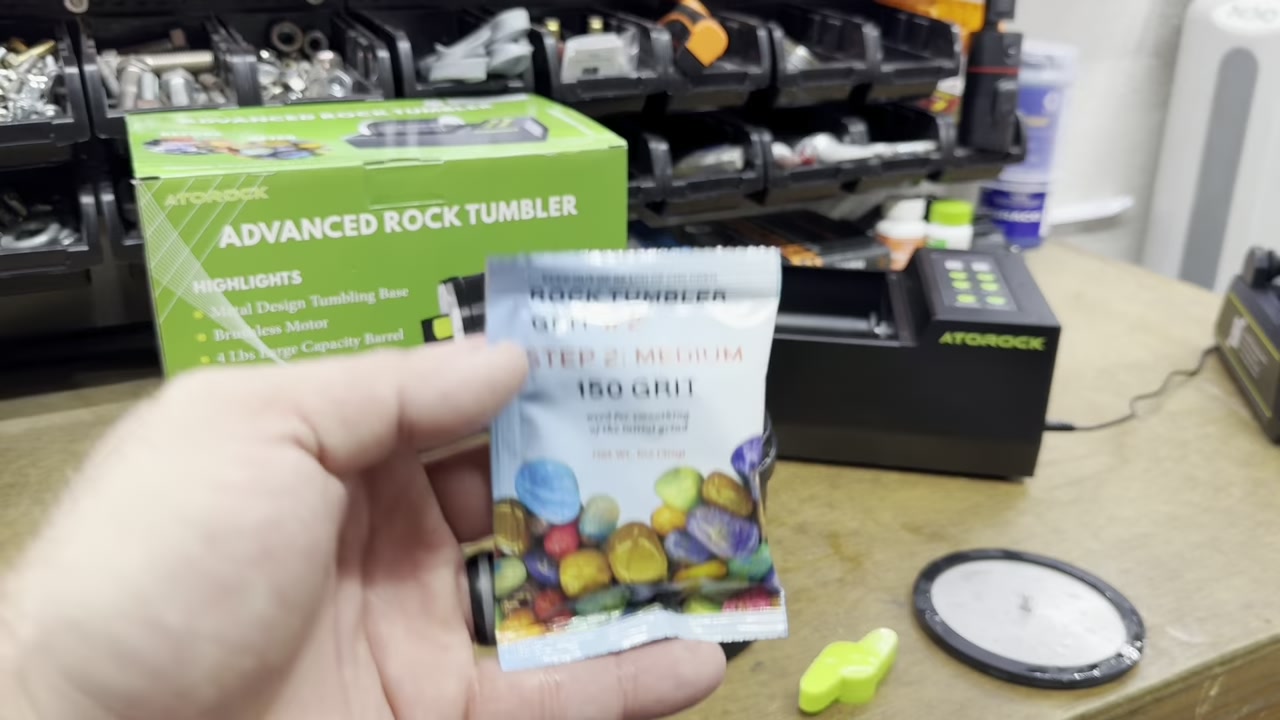 Our rating: 4.6/5 | Capacity: 4 lbs | Check current price on Amazon
The standout feature is the 4-pound barrel capacity, which is larger than most hobby tumblers.
Most hobby tumblers max out at 3 pounds. The AtoRock A1 gives you a full extra pound per batch. Over the course of a year, that’s a significant amount of additional polished stone. If you’re tumbling for craft projects, gifts, jewelry, or just building a collection, that extra capacity saves you entire cycles.
The motor handles the larger barrel well. I was worried it might struggle under heavier loads, but it’s been solid through multiple batches of dense material like jasper and agate. The barrel seal is good, not perfect, so I’d recommend keeping it on a tray just in case, but I haven’t had any serious leaks.
At around $100, the AtoRock A1 is good value for the capacity you’re getting. You’d typically need to spend $200+ on a double-barrel setup to match this kind of throughput.
Who should buy it: Anyone who wants maximum single-barrel capacity, craft sellers, hobbyists who tumble year-round, people tired of running three batches when two would do. Downside: Newer brand, less established support network. The larger barrel also means more grit per batch, which adds to ongoing costs. And while the motor handles the load fine, it works harder than a 3-pound tumbler motor, which could affect long-term lifespan. Keep some spare tumbling media on hand to fill space when you don’t have a full 4-pound load.9. Thumler’s Model B (15#) – Best Heavy-Capacity Single-Barrel
Our rating: 4.5/5 | Capacity: 15 lbs | Check current price on Amazon
The Thumler’s Model B is the industrial workhorse of the rock tumbling world. Where most home tumblers max out at 3-4 pounds per barrel, the Model B runs a single 15-pound barrel — about 4-5 times the capacity of a standard hobbyist tumbler in one run.
That capacity changes the economics of tumbling. Instead of running four 3-pound batches to polish a decent collection of beach agate or rough you picked up on a rockhounding trip, you run one Model B batch. Same timeline (5-7 weeks through the full grit progression), dramatically more stones at the end.
Build quality is classic Thumler’s — metal base, heavy-duty motor, rubber barrel for noise dampening. The motor is sized for the 15-pound load, which means it can handle being loaded heavy or tumbling dense material like agate and quartz without straining. Parts are readily available through the Tru-Square/Thumler’s network.
Who should buy it: Rockhounds who come home with pounds of rough per trip, experienced hobbyists tired of running multiple small batches, anyone polishing stones to sell at craft fairs or online where volume matters. Downside: Single-barrel means you can’t run different stages simultaneously — once a batch is loaded, the whole 15 pounds is committed to one grit stage for the full 7-10 days. The machine is also physically larger and heavier than the 3-pound tumblers above; you’ll need a dedicated space for it.Professional Tier: $300+
For the truly dedicated. Professional-grade tumblers are built for people who tumble regularly, in volume, and demand consistent results.
10. Thumler’s A-R2 – Dual-Barrel Budget Option
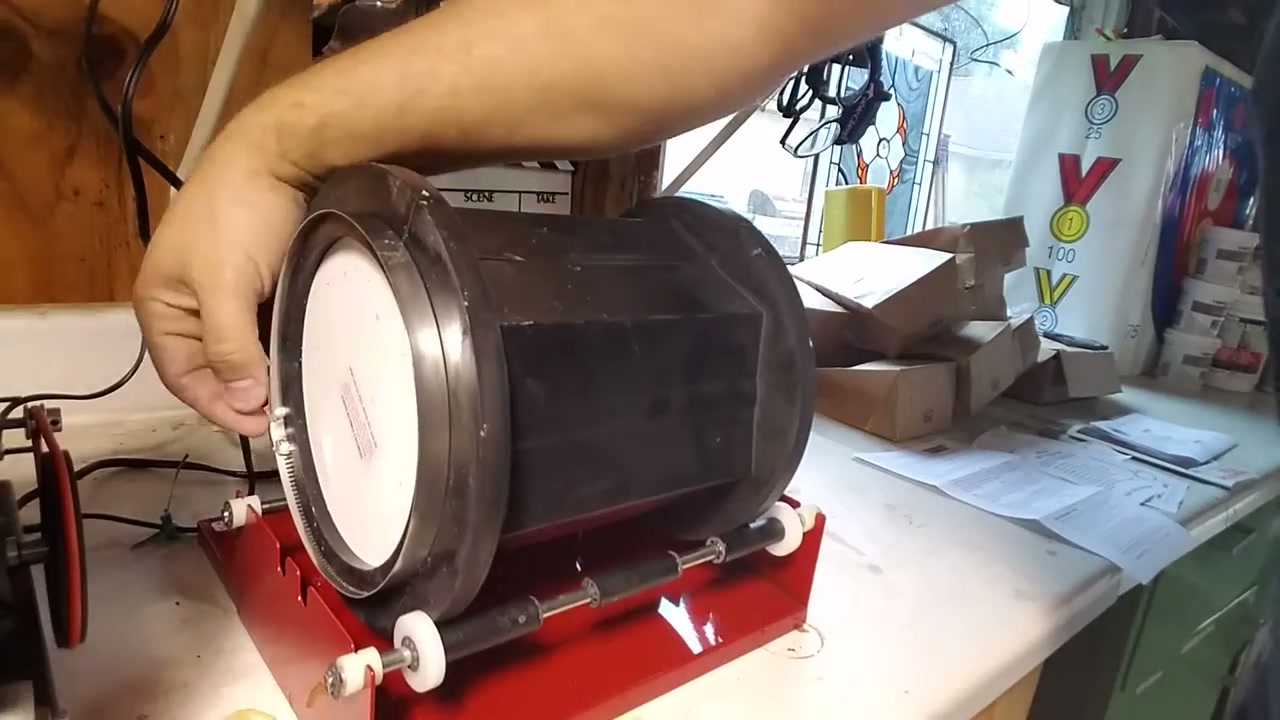 Our rating: 3.6/5 | Capacity: 6 lbs total (2 x 3 lb barrels) | Check current price on Amazon
The Thumler’s A-R2 takes everything that makes the A-R1 the best overall tumbler and doubles it. Two 3-pound barrels, the same heavy-duty motor design (scaled up), and Thumler’s track record for durability.
Six pounds of total capacity means you can process serious volume. Run both barrels on the same stage for maximum output, or stagger them across different grit stages for a continuous pipeline. Either way, you’re getting more polished rocks per month than any single-barrel machine can deliver.
The A-R2 shares the A-R1’s utilitarian design philosophy. It’s not pretty and it’s not quiet, but it delivers consistent results. The motor is beefy enough to handle both barrels fully loaded without breaking a sweat. Parts are interchangeable with other Thumler’s models, which means long-term maintenance is straightforward and affordable.
Priced at the premium end for a hobby dual-barrel, in line with other Thumler’s machines of this scale. The listing is newly introduced, so longer-term reliability data is still accumulating — Thumler’s track record on the A-R1 gives some confidence, but be aware you’d be an early adopter.
Who should buy it: High-volume hobbyists, semi-professional tumbling operations, rock and gem club members, anyone who has outgrown their single-barrel machine and wants maximum reliability. Downside: It’s loud. Louder than the A-R1, because now you’ve got two barrels grinding away. This is a garage or basement machine. Also, running two barrels means double the grit and polishing compound consumption. Factor ongoing supply costs into your budget.Buyer’s Guide: What to Look for in a Rock Tumbler
Not sure which tumbler is right for you? Here are the factors that actually matter, in order of importance.
Barrel Capacity
This is the single most important spec. Barrel capacity determines how many rocks you can process per batch, and since each batch takes 4-6 weeks, capacity directly impacts how much polished stone you produce per year.
- 2-2.5 lbs: Fine for learning, frustrating long-term
- 3 lbs: The best balance for most hobbyists
- 4+ lbs: Serious throughput for dedicated tumblers
A quick tip: you always want to fill the barrel about 2/3 to 3/4 full. Running a half-empty barrel produces poor results. So if you have a 3-pound barrel but only enough rocks for 1 pound, add ceramic tumbling media to fill the gap.
Motor Quality
The motor runs 24/7 for weeks at a time. That’s an extreme duty cycle. Cheap motors overheat, slow down, and fail. Quality motors from brands like Thumler’s and Lortone are designed for continuous operation and can last a decade or more.
Brushless motors (like in the KomeStone K2 Elite) are the newest development. They run cooler and theoretically last longer, but they haven’t been on the market long enough to prove multi-decade reliability.
Noise Level
Every rotary tumbler makes noise. The question is how much. If your tumbler will live in a garage or basement, noise barely matters. If it’s in a shared living space or an apartment, it matters a lot.
The quietest tumbler we tested is the Lortone 3A. The loudest are the Thumler’s machines. Everything else falls somewhere in between.
Noise reduction tips: Place the tumbler on a thick towel or rubber mat. Keep it on a solid surface (not a flimsy table that amplifies vibration). Make sure the barrel is properly loaded; unbalanced loads are louder.
Kit vs. Tumbler Only
Budget tumblers almost always come as kits with grit, rocks, and instructions. Mid-range and premium tumblers are usually sold as the machine only.
Kits are great for absolute beginners because they remove decision paralysis. But kit grit is often lower quality than what you can buy separately. Once you’ve done one or two batches, invest in proper grit and you’ll see a noticeable improvement in your results.
Rotary vs. Vibratory
All 10 tumblers on this list are rotary tumblers, which tumble rocks by rotating the barrel. Vibratory tumblers shake rocks against each other and work much faster (days instead of weeks), but they produce a different kind of finish, more of a natural, frosted look rather than a high-gloss polish.
For beginners, rotary is the way to go. It’s simpler, more forgiving, and produces the classic polished stone look that most people want. Vibratory tumblers are a great second machine for experienced hobbyists, but they’re not where you start.
Build Quality and Parts Availability
This matters more than most people realize when they’re buying their first tumbler. Barrels wear out. Belts stretch. Bearings eventually need replacement. With established brands like Thumler’s and Lortone, you can find replacement parts easily and cheaply. With newer or off-brand tumblers, you might struggle.
It’s not a deal-breaker for budget machines, since you’ll likely upgrade before parts become an issue. But for a mid-range or premium purchase that you expect to last years, brand longevity and parts availability should factor into your decision.
How to Get the Best Results from Any Tumbler
No matter which tumbler you buy, your results depend heavily on technique. Here are the basics:
1. Start with the right rocks. Hardness matters. Tumble rocks of similar hardness together. Mixing a soft calcite with hard agate means one gets destroyed while the other barely changes.
2. Don’t skip grit stages. The four-stage process (coarse, medium, fine, polish) exists for a reason. Each stage removes the scratches from the previous one. Skip a stage and you’ll end up with scratched, dull stones.
3. Fill the barrel properly. Two-thirds to three-quarters full is ideal. Too empty and the rocks won’t tumble correctly. Too full and they can’t move.
4. Be patient. A full tumbling cycle takes 4-6 weeks. Rushing it produces mediocre results. Let each stage run its full duration.
5. Clean everything between stages. One grain of coarse grit in your polish stage will ruin the entire batch. Clean the barrel, clean the rocks, clean the lid. Then clean them again.
For a complete walkthrough, our guide on how to use a rock tumbler covers every step in detail.
My Top 3 Picks (If You Just Want an Answer)
Best overall: Thumler’s A-R1 – Proven, reliable, great results. Best for beginners: National Geographic Hobby Kit – Everything in the box. Zero guesswork. Best heavy-capacity upgrade: Thumler’s Model B (15#) – 15-pound single-barrel workhorse. Five times the capacity of a standard hobbyist tumbler.Frequently Asked Questions
What is the best rock tumbler for beginners?
The National Geographic Hobby Rock Tumbler Kit is the best rock tumbler for beginners. It includes everything you need: the tumbler, rough gemstones, four stages of grit, and clear instructions. You can start tumbling rocks the day it arrives. For beginners who want something slightly more capable, the KomeStone K1 Pro offers a brushless motor and larger barrel for about $20 more.
How much does a good rock tumbler cost?
Good rock tumblers range from $50 to $300+. Budget tumblers ($50-80) work well for beginners and casual use. Mid-range tumblers ($80-180) like the Thumler’s A-R1 and Lortone 3A offer the best balance of performance, durability, and value for most hobbyists. Premium and professional double-barrel tumblers ($200-300+) are worth it for high-volume tumbling.
How long does it take to tumble rocks?
A complete tumbling cycle takes 4-6 weeks using a rotary tumbler. This includes four stages: coarse grind (about 7 days), medium grind (about 7 days), fine grind (about 7 days), and final polish (about 7 days). Some batches need longer, especially during the coarse grind stage. Vibratory tumblers are faster, typically finishing in 1-2 weeks, but produce a different finish.
Are rock tumblers loud?
Most rotary rock tumblers produce a noticeable humming or grinding sound, but the noise level varies significantly between models. The Lortone 3A is the quietest tumbler we tested and can run in a living space without being disruptive. Budget tumblers and Thumler’s models tend to be louder and are best placed in a garage, basement, or laundry room. Placing the tumbler on a thick rubber mat or folded towel reduces noise and vibration.
What rocks can you tumble?
The best rocks for tumbling are hard, non-porous stones with a Mohs hardness of 6-8. Agates, jaspers, quartz, petrified wood, and obsidian all tumble beautifully. Avoid tumbling soft stones (like calcite or fluorite) with harder ones, as the soft stones will get destroyed. Also avoid porous or fractured rocks, as they won’t take a good polish. Check out our beginner’s overview for more details on selecting rocks.
Is a double-barrel tumbler worth it?
Yes, if you tumble regularly. A double-barrel tumbler like the Thumler’s A-R2 lets you run two batches simultaneously, either at the same grit stage for maximum volume or at different stages to keep a continuous pipeline. If you find yourself constantly waiting for your single-barrel tumbler to finish, a double-barrel machine is a worthwhile investment.
How much electricity does a rock tumbler use?
Rock tumblers are efficient. Most hobby tumblers use about 25-50 watts, which costs roughly $1-3 per month running continuously. Even a double-barrel professional model won’t significantly impact your electricity bill. We break down the exact numbers in our rock tumbler electricity cost guide.
Do I need to buy grit separately?
Budget kit tumblers include grit for your first batch or two. Mid-range and premium tumblers typically don’t include grit. Either way, you’ll need to buy grit eventually, as it’s a consumable that gets used up each cycle. Investing in quality grit makes a noticeable difference in your final results compared to the basic grit included in some kits.
What’s the difference between rotary and vibratory tumblers?
Rotary tumblers spin rocks inside a barrel, slowly grinding and polishing them over 4-6 weeks. They produce a rounded, high-gloss finish. Vibratory tumblers shake rocks against each other and work much faster (days instead of weeks), but they produce a more natural, slightly textured finish and don’t round the stones as much. Most beginners start with rotary tumblers. Vibratory machines are popular as a second tumbler for experienced hobbyists who want faster results or prefer to preserve a rock’s natural shape.
Final Thoughts
The “best” rock tumbler depends entirely on where you are in the hobby and what you need. A National Geographic kit is perfect for a curious 10-year-old. A Thumler’s A-R2 is perfect for someone who tumbles 50+ pounds of rock per year. Neither is wrong. They’re just different tools for different stages of the journey.
If you’re new and want a straight recommendation: get the Thumler’s A-R1. Yes, it costs more than a budget kit. Yes, you’ll need to buy grit and rocks separately. But it’s the tumbler you’ll still be using five years from now, and that makes it the cheapest option in the long run.
Whatever you choose, the most important thing is to actually start. Buy the tumbler, load it up, and begin your first batch. Four weeks from now, you’ll be holding polished stones you made yourself, and the results speak for themselves.
*Looking for more guidance? Browse our rock tumbling tips or learn about choosing the right polishing compounds for the best possible finish.*