Updated for 2026. You’ve spent weeks tumbling rough rocks into polished gems. Now what? Stuffing them in a drawer is a waste. The right display turns your tumbled stones from a pile of pretty rocks into conversation starters, art pieces, and genuine home decor.
This guide covers 10 proven display methods for tumbled rocks — from simple glass jars to museum-quality lighted cases — with specific product recommendations and practical tips for each approach. Whether you have a dozen stones or hundreds, there’s a display style here that fits your collection and your space.
Before You Display: Preparing Your Stones
A few quick prep steps make a big difference in how your display looks long-term:
- Clean thoroughly. Even after polishing, residual grit can dull the surface. Give stones a final wash with warm soapy water and dry completely.
- Apply a finish (optional). A thin coat of mineral oil or Renaissance wax enhances color and protects the polish. This is especially effective on darker stones like obsidian or tiger’s eye.
- Sort by color, type, or size. Organized displays look dramatically better than random piles. Group by color family for visual impact, or by stone type for an educational feel.
1. Shadow Boxes

Shadow boxes are one of the most popular display methods in the rock tumbling community, and for good reason. These enclosed frames protect your stones from dust while creating a gallery-style presentation on any wall.
Pro tips: Use hot glue or museum putty to secure stones in place — this prevents them from shifting when the box is hung vertically. Line the back with dark felt or velvet to make lighter stones pop. Mix shadow box sizes on a wall for a gallery effect.
Best for: Your best specimens, themed collections (all agates, all jaspers), or stones from a specific trip or location.
Recommended: Wooden Shadow Box
2. Glass Jars and Vases

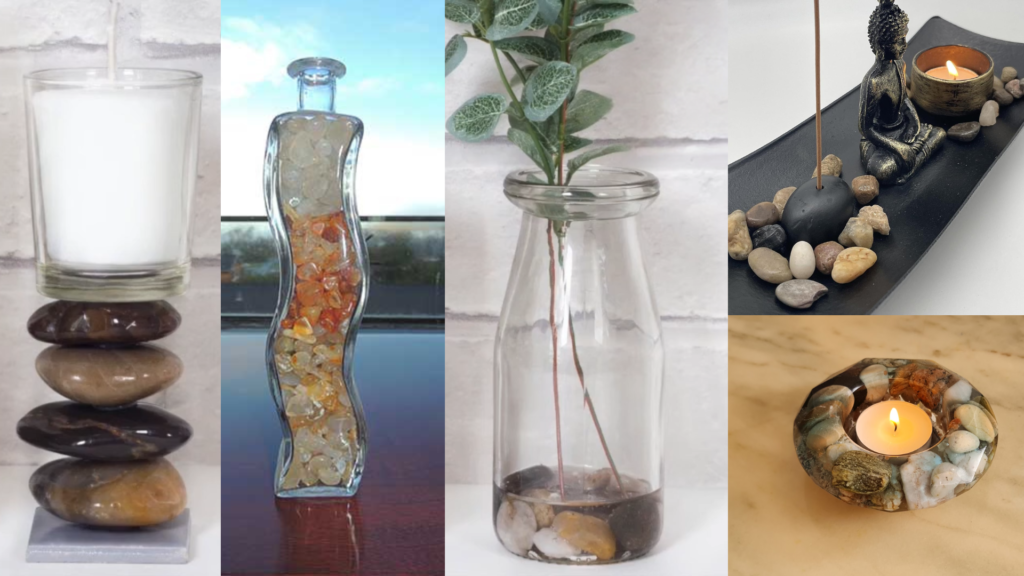
The simplest display method and often the most effective. Clear glass jars, vases, or apothecary jars let the colors of your stones do the talking. Layer different colored stones for a rainbow effect, or fill with a single type for a cohesive look.
Pro tips: Add water to the jar for an instant color boost — wet tumbled stones show their true vibrant colors. Use tall cylinder vases for a dramatic centerpiece, or small mason jars for a shelf display. Place a battery-operated LED puck light underneath a clear vase for a stunning nighttime glow.
Best for: Bulk display of mixed stones, coffee table centerpieces, bathroom decor, and gifts.
Recommended: Clear Slant Cut Glass Vase
3. Wooden Trays and Bowls

Wooden trays and bowls bring a warm, natural aesthetic that complements the earthy beauty of tumbled stones. The contrast of polished stones against natural wood grain is genuinely beautiful — especially with lighter stones like rose quartz, moonstone, or clear quartz on dark walnut wood.
Pro tips: Crescent moon trays are hugely popular in the crystal and rock collecting community. Place a tray on a coffee table where guests can pick up and handle the stones — people always want to touch polished rocks. Driftwood pieces with natural hollows also make unique display bowls.
Best for: Living room coffee tables, bedside tables, meditation spaces, and interactive displays where guests can handle the stones.
Recommended: Crescent Moon Tray for Crystals
4. Display Cabinets

When your collection grows beyond a single tray or jar, a display cabinet becomes the serious collector’s best friend. Glass-door cabinets protect stones from dust (a real problem — dusty tumbled rocks lose their shine fast) while making your entire collection visible at a glance.
Pro tips: The IKEA Detolf ($70) is the rock collector’s go-to budget cabinet — four glass shelves, clean lines, and it fits in tight spaces. For a more premium look, display cases with adjustable shelves and built-in LED lighting turn your collection into a museum-quality exhibit. Use small acrylic risers inside to create depth and height variation on each shelf.
Best for: Large collections (50+ stones), valuable specimens, and anyone who wants a dedicated display area.
Recommended: Adjustable Rock Display Case
5. Miniature Rock Gardens

Zen gardens and miniature rock gardens combine your tumbled stones with sand, gravel, and small plants for a living display. Use a shallow wooden or ceramic tray as the base, fill with fine sand or white gravel, and arrange your best stones as focal points.
Pro tips: Add small succulents or air plants between the stones for a natural look. Use a miniature rake to create patterns in the sand around your stones — this is genuinely meditative and makes a great desk display. For outdoor gardens, embed larger tumbled stones among ground cover plants or along garden path borders.
Best for: Desk displays, meditation corners, outdoor garden accents, and creative projects with kids.
Recommended: Mini Zen Garden Kit for Desk
6. Jewelry and Wearable Displays

Why just display your tumbled stones when you can wear them? Wire wrapping is the easiest jewelry-making technique for beginners — wrap copper or silver wire around a tumbled stone to create a pendant in minutes, no drilling required. Cage pendants are even simpler: drop the stone in and close the cage.
Pro tips: Use 3D floating frames to display your finished jewelry pieces on a wall — they create a beautiful gallery effect. Tumbled stones also make excellent key chain fobs, bookmarks (with a wire and tassel), and zipper pulls. For gifts, mount a stone on a pendant card with a small tag identifying the stone type.
Best for: Gift-making, craft projects, Etsy sellers, and anyone who wants to take their stones beyond the shelf.
Recommended: 3D Floating Frame
7. Floating Shelves

Floating shelves turn any blank wall into a rock display gallery. The clean, minimalist look works in any room, and you can easily rearrange stones as your collection grows. Moon-shaped and hexagonal shelves are especially popular in the rock and crystal community for their unique aesthetic.
Pro tips: Use small acrylic stands or mineral display easels to prop up your best stones at an angle — this shows off more of the stone’s surface than laying it flat. Arrange stones in odd numbers (groups of 3, 5, or 7) for a more pleasing visual composition. Place your most colorful stones at eye level.
Best for: Small spaces, renters (command strips work), creating a gallery wall, and displaying your top 10-20 favorite specimens.
Recommended: Wooden Moon Crystal Display Shelf
8. Terrariums

Terrariums combine tumbled stones with living plants for a display that’s truly alive. Use a geometric glass container, layer the bottom with tumbled stones for drainage (they work perfectly for this), add soil, and plant small ferns, moss, or succulents around your showcase stones.
Pro tips: Use tumbled stones as both the drainage layer AND the decorative surface layer — colorful agates and jaspers look stunning peeking through moss. Air plants (tillandsia) are the lowest-maintenance option — they don’t need soil and can sit directly on stones. For a no-maintenance option, create a “dry terrarium” with just sand, stones, and dried moss.
Best for: Plant lovers, unique gifts, windowsill displays, and combining two hobbies into one beautiful creation.
Recommended: Glass Geometric Terrarium
9. Mosaics and Artistic Arrangements

Turn your stone collection into wall art. Arrange tumbled stones into mandalas, spirals, color gradients, or abstract patterns on a flat surface or mounting board. Glue them in place with E6000 adhesive (the strongest craft adhesive for stone-to-surface bonding) and frame the result.
Pro tips: Start with a color gradient — arrange stones from darkest to lightest in a spiral or line. Use a large wooden round (tree slice) as the base for a rustic mandala. Stepping stones for the garden are another great project: embed tumbled stones in concrete in a decorative pattern.
Best for: Creative projects, garden art, personalized gifts, and displaying a large volume of smaller stones that are hard to show individually.
Recommended: Acacia Wood Decorative Tray
10. Lighted Display Cases

Lighting transforms a good display into a spectacular one. LED lights bring out colors and translucency in stones that you can’t see under normal room lighting. Translucent stones like agate, carnelian, and rose quartz practically glow when backlit.
Pro tips: Warm white LEDs (2700K-3000K) are the most flattering for most stones. Cool white (5000K+) can wash out warm-toned stones but works beautifully with blues, purples, and clear quartz. USB-powered LED strip lights are cheap and easy to install inside any cabinet or shelf. For individual specimens, small LED light bases ($5-10) create a dramatic spotlight effect from below.
Best for: Translucent stones, evening ambiance, premium specimens, and anyone who wants maximum visual impact.
Recommended: Showcase Organizer Box for Collectibles
Labeling and Organizing Your Collection
As your collection grows, keeping track of what’s what becomes important — especially if you collect from different locations or want to learn stone identification. Here are some practical approaches:
- Numbered system: Paint a tiny number on the bottom of each stone with a fine-tip paint pen, then maintain a numbered list in a notebook or spreadsheet with stone type, source, date tumbled, and any notes.
- Small label cards: For display cases and trays, place small printed cards next to each stone or group. Include the stone name, hardness (Mohs scale), and where you found or purchased it.
- QR code labels: For the tech-savvy collector, print tiny QR codes that link to a detailed entry in a Google Sheet or collection app. Visitors can scan to learn about each stone.
- Group by type: Even without labels, organizing by stone type (all agates together, all jaspers together) helps you and visitors identify stones naturally.
Keeping Your Display Looking Its Best
Tumbled stones are low-maintenance, but a little care keeps them looking freshly polished for years:
- Dust regularly. A soft microfiber cloth or feather duster keeps stones bright. For collections in open trays, a quick wipe every week or two is enough.
- Avoid direct sunlight. UV light can fade certain stones over time, especially amethyst, rose quartz, and citrine. Display these away from south-facing windows.
- Re-oil occasionally. If stones look dull, a light coat of mineral oil (food-grade, from any pharmacy) brings back the color instantly. Renaissance wax provides longer-lasting protection.
- Handle with clean hands. Oils from skin won’t damage stones, but fingerprints can dull the surface over time. An occasional wash in warm soapy water solves this.
- Rotate your display. If you have more stones than display space, rotate your collection seasonally. This keeps the display feeling fresh and gives all your stones time to shine.
Frequently Asked Questions
What is the best way to display tumbled rocks?
The best display depends on your collection size and space. For small collections (under 20 stones), shadow boxes and floating shelves create a gallery effect. For medium collections, glass jars and wooden trays are simple and effective. Large collections benefit from a dedicated display cabinet with glass doors to protect from dust. Adding LED lighting dramatically enhances any display method.
How do you keep tumbled rocks shiny on display?
Apply a thin coat of mineral oil or Renaissance wax after tumbling to lock in the polish and enhance colors. Keep stones dust-free with regular wiping. Avoid prolonged direct sunlight which can fade some stones (especially amethyst and rose quartz). If stones look dull over time, a quick wash in warm soapy water followed by a fresh coat of mineral oil restores the shine immediately.
Can you make jewelry from tumbled rocks?
Absolutely. Wire wrapping is the easiest method — wrap copper, silver, or gold wire around a tumbled stone to create a pendant. No drilling or special tools needed, and there are hundreds of free tutorials on YouTube. Cage pendants are even simpler: just place the stone inside and close the cage. For more advanced projects, you can drill stones with a diamond-tipped drill bit to create beads, or use jewelry-grade E6000 adhesive to glue flat-backed stones into settings.
How do I organize a large rock collection?
Start by grouping stones by type (agates, jaspers, quartz varieties, etc.) or by color for visual impact. Number each stone with a small paint pen on the bottom and maintain a catalog in a notebook or spreadsheet. Use a display cabinet with adjustable shelves to separate categories. Small printed labels next to each group help visitors (and you) identify stones.
What’s the cheapest way to display tumbled rocks?
Glass mason jars (around $1 each) are the most affordable and effective display option. Fill them with stones sorted by color for an eye-catching shelf display. Thrift store bowls, trays, and picture frames also work beautifully. A shallow plate with a handful of your best stones makes an instant coffee table display that costs nothing.