Why Exotic Stones Demand a Different Approach
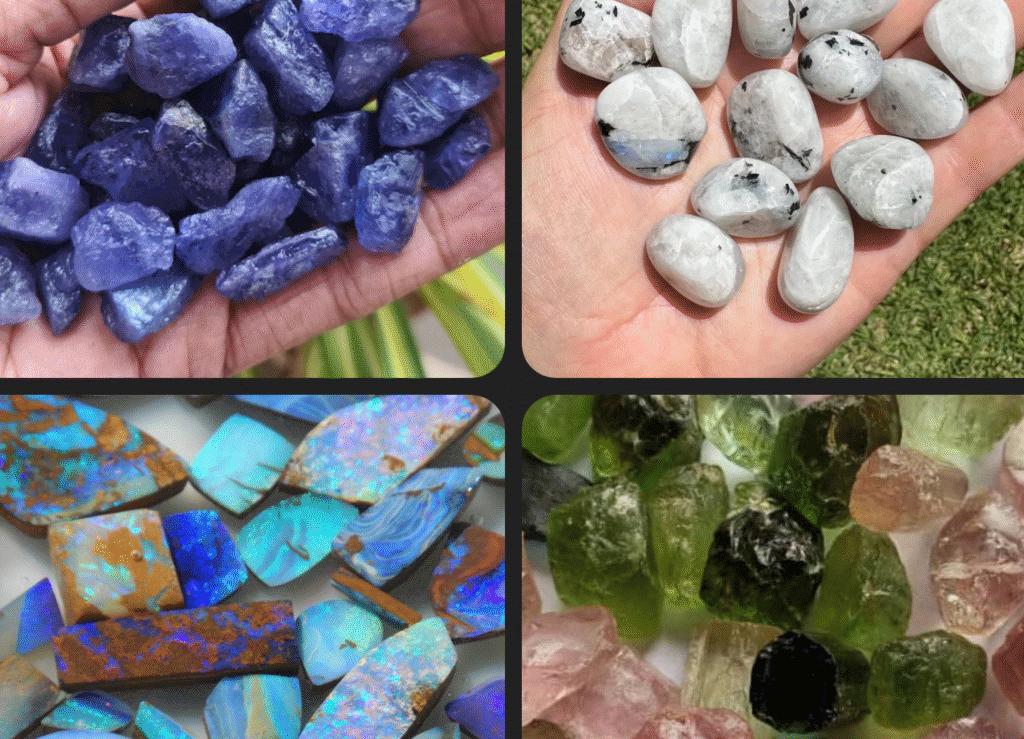
Rock tumbling is rewarding no matter what you’re polishing, but exotic and rare gemstones aren’t forgiving. Tanzanite, tourmaline, opal, and moonstone each have their own quirks. Hardness varies wildly. Fracture properties differ. One stone might need gentle pressure and long cycles, while another requires aggressive grinding to avoid clouding.
If you’ve been tumbling standard quartz and agates, stepping into rare gemstones means unlearning some habits. Your normal tumbling routine won’t cut it here. These stones demand respect, specific grit sequences, and careful monitoring. The payoff though? Finished pieces that genuinely look like jewelry-grade gems.
Tanzanite: The Fragile Beauty
Understanding Tanzanite’s Weakness
Tanzanite ranks 6 to 6.5 on the Mohs hardness scale, which sounds reasonable until you consider its perfect cleavage. This is the stone’s Achilles heel. Cleavage means the crystal structure has natural planes where it wants to split apart. Apply too much pressure during tumbling, and you’ll end up with fragments instead of finished gems.
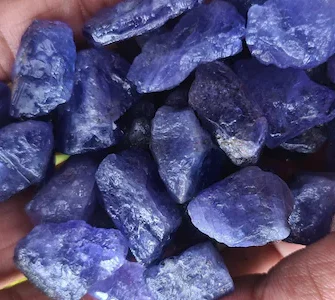
The color is stunning, though. You’re likely working with deep blue stones with hints of purple. That’s the draw. But achieving that polished look without destroying the stone takes patience.
Tanzanite Tumbling Strategy
- Start with 150-grit media instead of jumping to coarser grades. Gentleness matters more than speed here.
- Use 50% fewer stones in your tumbler compared to standard runs. This reduces collision impact and the chances of fracturing.
- Run cycles in 2 to 3-week intervals rather than the typical 4-week grind. Monitor progress frequently and stop early if you see stress fractures forming.
- Skip aggressive vibratory tumblers entirely. Stick with rotary tumblers running at lower speeds (around 20 RPM if your machine allows adjustment).
- Use ceramic or plastic media, never steel shot. Steel causes too much impact trauma.
- For the polish stage, extend your time and use a pre-polish grit like 600 before moving to fine polish compounds.
Don’t expect Tanzanite to shine like quartz does. The final polish will be more of a soft, jewel-like luster rather than mirror-bright. That’s authentic Tanzanite.
Tourmaline: Dense and Demanding
Why Tourmaline Is Actually a Prima Donna
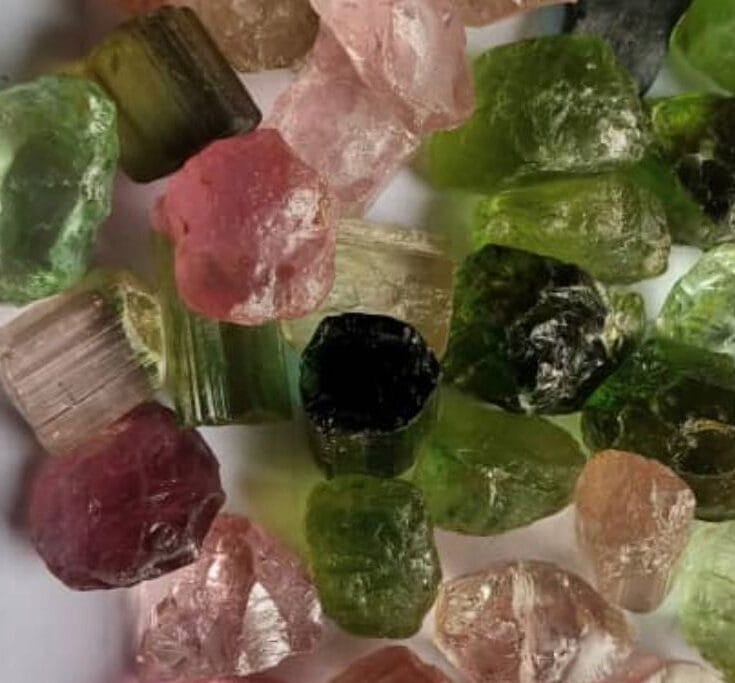
Tourmaline sits at 7–7.5 on the Mohs scale and feels tough, but don’t be fooled: it’s brittle as glass, loaded with parting and cleavage planes, and full of hidden fractures. Those gorgeous color zones and striations you love? They polish at different speeds, so one wrong move and you get wavy, chipped, or dull-banded stones instead of the candy you were expecting.
Tourmaline Polishing Protocol
- Start with 180/220 or 220/325 grit — never 60/90 or 100. Coarser grit will beat your crystals to death in days.
- Run the coarse stage 7–10 days max. Check at day 7 and pull the second the pits are gone.
- Medium grit (400–600) for another 7–10 days. This is plenty to kill the previous scratches without bruising.
- Pre-polish (800–1200 grit or 1000 aluminum oxide) 5–7 days. Color banding finally starts popping here.
- Final polish with cerium oxide (works on every color) or tin oxide, 4–7 days on plastic or treated leather pellets. Longer than a week usually creates under-cutting and rippled surfaces.
- Use ceramic cylinders or plastic pellets as filler — both are perfect. Run your rotary tumbler at normal or slightly slower speed (25–40 RPM). Full blast just adds unnecessary violence.
One pro tip: tumble tourmaline with other 7–7.5 hardness stones (quartz, beryl, more tourmaline). Mixing in softer rocks finishes them early and leaves your tourmaline looking neglected and scratched while everything else is mirror-bright.
Do it this way and you’ll have glossy, sharply banded tourmaline in 3–5 weeks instead of a barrel of expensive green and pink confetti. Treat it gentle — it’s a diva, not a tank.
Opal: The Wildcard
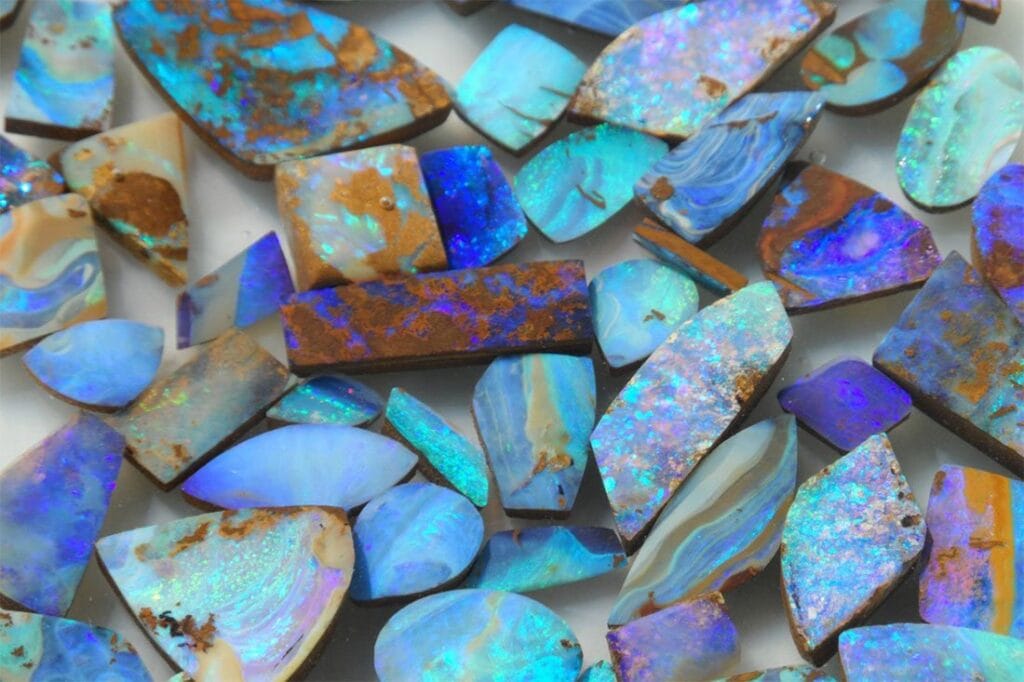
Opal’s Deceptive Danger
Opal ranks only 5.5–6.5 on the Mohs scale, but hardness is almost irrelevant. The real killer is its water content (up to 21% in some material). That water is what creates the fire, but it also makes opal a ticking time bomb: tumble it wrong and it crazes, cracks, or explodes into shards days or weeks after you think you’re done. It’s also insanely brittle and chips at the slightest knock.
The Opal Tumbling Gamble
- Start no coarser than 220 or 325 grit — 60/90 or 120/150 will bruise and fracture it instantly.
- Use only small ceramic cylinders or plastic pellets as media. Steel shot is suicide; even heavy ceramic angles can chip edges.
- Load the barrel 70–80% full (yes, more than normal). The extra cushioning is the difference between chipped and intact.
- Run very short cycles: 4–7 days coarse, 5–7 days medium (600), 4–6 days pre-polish (1000–1200), 3–5 days polish. Anything longer dramatically raises the cracking risk.
- Keep workspace humidity 45–65% the entire time (use a cheap hygrometer). Dry air = crazing.
- Polish with cerium oxide on plastic pellets or very soft foam pellets. Tin oxide can work but cerium is gentler and gives the brightest fire.
- After the final rinse, immediately soak the opals in distilled water for 24–48 hours, then pat dry and seal in a small container with a damp (not soaking) paper towel or silica gel tuned to 50–55% RH. Some people dip in mineral oil or Opticon for extra insurance.
Real talk: even with perfect technique, 20–50% of your opal can still craze or crack weeks later. That’s not you failing — that’s opal being opal. Start with inexpensive common or candy-store potch to practice, and never tumble your best Ethiopian welo or Lightning Ridge black opal unless you’re ready to treat the loss as tuition.
Moonstone: The Sheen Keeper
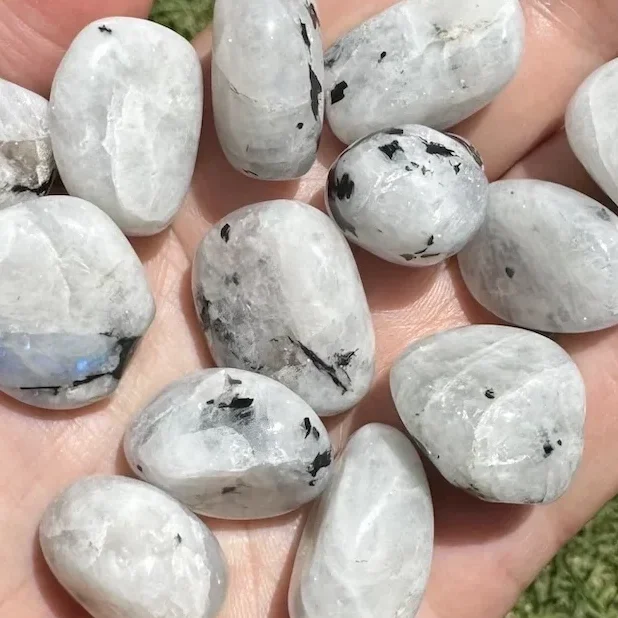
Moonstone’s Unique Appeal
Moonstone (feldspar) ranks 6–6.5 and looks harmless, but it’s a total drama queen. It has perfect cleavage in two directions and the adularescence—that floating blue-white flash—lives in paper-thin layers that are ridiculously easy to smear, burn, or destroy. Over-grind or over-polish for even a day too long and the magic dies forever, leaving you with a boring, glassy blob.
Preserving Moonstone’s Magic
- Start no coarser than 325 grit—many go straight to 400 or 600 if the rough is already smooth. 220 is still too violent for most pieces.
- Keep your tumble load at 40–50% capacity max. The less banging around, the happier the moonstone.
- Use plastic pellets or the tiniest, roundest ceramic cylinders only. Big or angular media will bruise and chip the lamellae.
- Run short, gentle cycles: 5–7 days coarse, 5–7 days 600, 4–6 days 1000–3000 pre-polish, 3–5 days final polish. Long cycles create heat and kill the glow.
- Watch like a hawk for cloudiness or dulling at every check. If the schiller starts fading, you’ve already gone too far—there’s no bringing it back.
- Final polish with cerium oxide or ultra-fine aluminum oxide (8000–14000) on plastic or soft foam pellets. Tin oxide often clouds or burns moonstone—avoid it.
- Polish stage never longer than 5 days. More than a week and you’ll over-polish the surface, flattening the adularescence into a dead, mirror-like stare.
The finished moonstone should still float that dreamy blue-white sheen when you tilt it. If it looks like a shiny piece of quartz with no glow, congratulations—you’ve murdered the magic. Treat it like the delicate princess it is and you’ll keep the spell alive.
Common Mistakes Across All Exotic Stones
Even with species-specific guidance, collectors make recurring errors. Mixed batches are the biggest culprit. Tumbling tanzanite with tourmaline means the softer stone finishes first and gets overworked, while the tourmaline stays rough. Stick to single-species runs.
Rushing grit stages is another killer. With exotic stones, each stage does critical work. Skipping or shortening them creates gaps that compound in later stages. You can’t polish away scratches left by inadequate medium-grit work.
Don’t use old, worn grit. Exotic stones are too valuable to gamble with. Fresh grit each cycle ensures consistency. Worn grit creates uneven surfaces and unpredictable results.
Finally, storage matters. After tumbling these stones, don’t just toss them in a jar. Opal needs humidity control. Tanzanite needs protection from UV light (it can fade). Tourmaline and moonstone are more forgiving, but all rare stones deserve proper storage to maintain their post-polish condition.
Building Your Exotic Stone Expertise
Rock tumbling is a rewarding hobby, and stepping into exotic and rare gemstones elevates the challenge and the reward. You’re not just following a generic formula anymore. You’re learning the quirks of individual species and adapting your technique accordingly.
Start with one exotic stone. Master its tumbling requirements. Then move to the next. This approach builds intuition and prevents expensive mistakes. Keep detailed notes on cycle times, media types, and results for each species.
If you’re dealing with difficult stones for the first time, reviewing your current techniques for challenging materials will give you a foundation to build from. For a deeper dive into the fundamentals, the importance of grit selection remains relevant across all stone types.
These exotic gemstones aren’t forgiving, but they reward precision and patience. The polished pieces you create will rival commercial specimens. Happy tumbling!