Picking the best rock tumbler depends on what you actually want to do with it. A kid who wants to polish a handful of agates needs a completely different machine than someone processing pounds of jasper every month. I have tested and compared dozens of tumblers over the years, and these are the ones that actually deliver results.
Below is a quick comparison of my top picks, followed by detailed reviews of each one.
Quick Comparison Table
| Tumbler | Best For | Barrel Size | Price | Rating |
|---|---|---|---|---|
| National Geographic Hobby Kit | Best Beginner | 1 lb | $64.99 | 4.5/5 |
| KomeStone K1 Professional | Best Value | 2.5 lb | ~$55 | 4.4/5 |
| KomeStone K2 Elite | Best Serious Hobbyist | 3 lb | $149.98 | 4.6/5 |
| AtoRock A1 Professional | Best Large Capacity | 4 lb | ~$100 | 4.6/5 |
| Thumler’s A-R2 | Best Professional | 6 lb (double) | $209.99 | 4.1/5 |
Best Beginner Rock Tumbler: National Geographic Hobby Rock Tumbler Kit
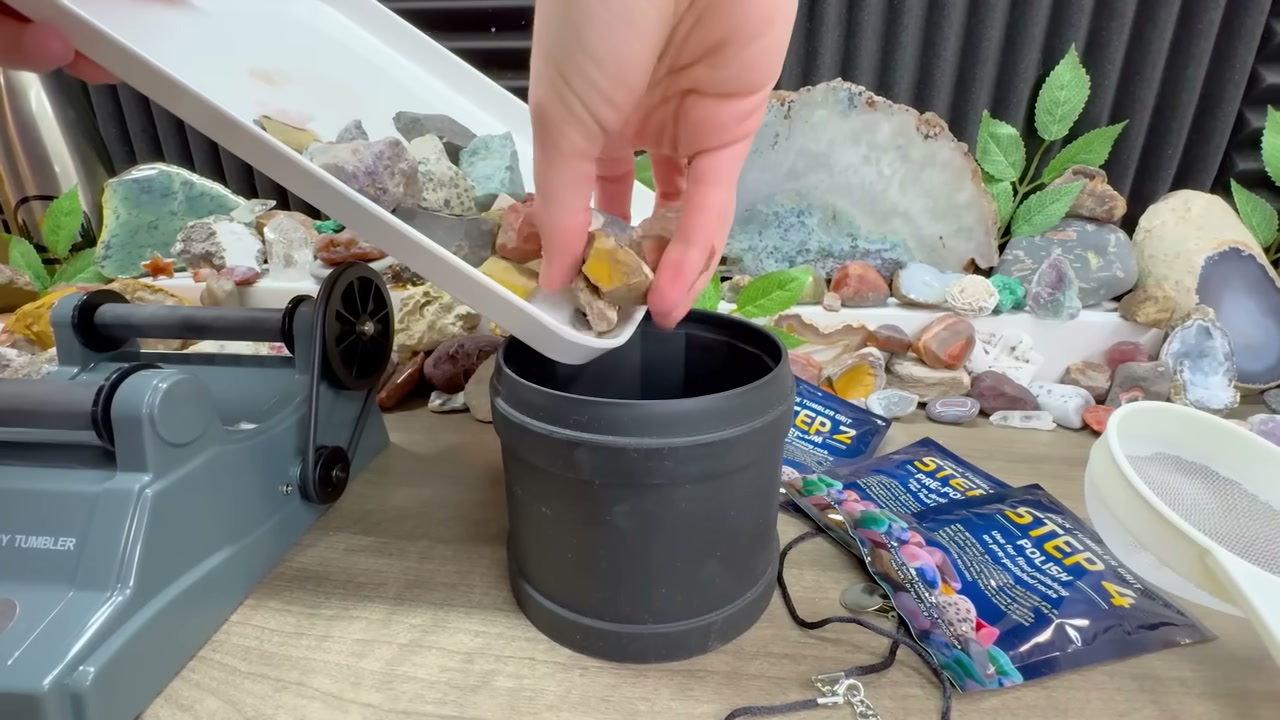
The National Geographic Hobby Kit is the gold standard starter tumbler for a reason. It comes with everything you need right out of the box: a 1-pound rubber barrel, four stages of grit, rough gemstones, and a detailed learning guide. Over 25,000 buyers have rated it 4.5 stars, making it the most popular rock tumbler on Amazon by a wide margin.
The rubber barrel keeps noise levels reasonable. You can run this in a garage or laundry room without losing your mind. The included rocks are a nice mix of jasper, amethyst, and tiger’s eye that polish up beautifully after the full 4-week cycle.
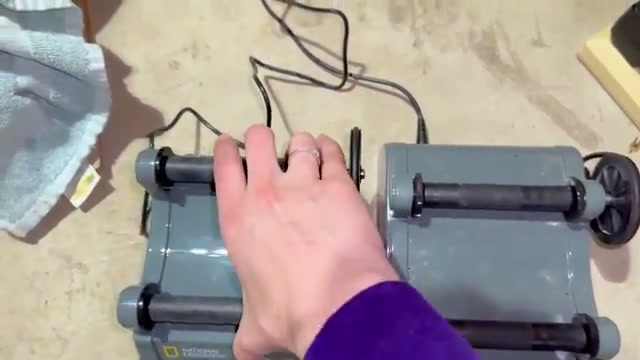
One thing to know: the motor runs a bit fast even on the lowest setting. This is a common observation among experienced tumblers. For beginners, it rarely matters since you are learning the process anyway. But if you find yourself getting serious about the hobby, you will likely upgrade to something with more barrel capacity within a year.
The 1-pound barrel is the main limitation. You can only process a small handful of rocks per batch, and each batch takes about 28 days. If you are buying this for a curious kid or testing whether rock tumbling is your thing, it is perfect. For anything more, keep reading.
Who should buy this: First-time tumblers, kids ages 8 and up, gift buyers who want a complete kit.
If you are new to the hobby, check out our beginner’s guide to rock tumbling for tips on getting the best results from your first batch.
Best Value Rock Tumbler: KomeStone K1 Professional
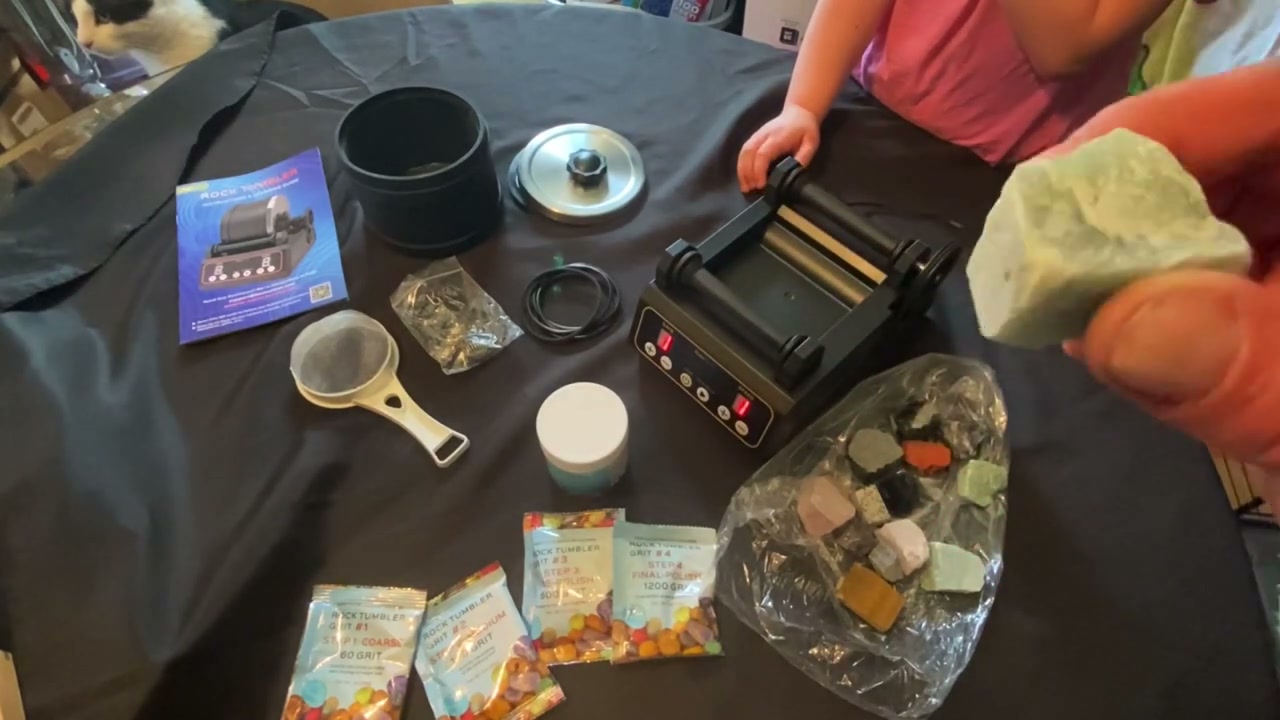
The KomeStone K1 gives you 2.5 times the barrel capacity of the National Geographic at a lower price point. That is hard to argue with. At around $55, you get a 2.5-pound rubber barrel that can process a meaningful amount of rock in each 4-week cycle.
The build quality is solid for the price. The motor is quiet enough to run in a living space, and the rubber barrel helps dampen vibration. You will need to buy your own grit and rough rocks separately, but that keeps the cost down and lets you choose better quality supplies from the start.
For the money, this is the tumbler I recommend to anyone who already knows they want to get into rock tumbling and does not need the hand-holding of a complete starter kit. Pair it with a good set of tumbling grits and you are set.
Who should buy this: Budget-conscious hobbyists, anyone who wants more capacity without spending more money.
Best Serious Hobbyist Rock Tumbler: KomeStone K2 Elite
The K2 Elite is where rock tumblers start getting genuinely impressive. The 3-pound barrel is big enough to handle decent batches, and the brushless motor is a game-changer. Brushless motors run cooler, last longer, and produce less noise than traditional brushed motors. You can run this thing 24/7 for weeks without worrying about overheating.
At $149.98, it costs more than twice what you would pay for the K1. But the build quality justifies the price. The barrel seal is tighter, the motor is more reliable, and the overall construction feels like it will survive years of continuous use.
This is the tumbler for someone who has already done a few batches on a cheaper machine and wants to upgrade. The difference in output quality between a $55 tumbler and a $150 tumbler is noticeable, especially during the final polish stage.
Remember to fill the barrel 2/3 to 3/4 full for the best results. Running a half-empty barrel wastes grit and produces uneven surfaces. If you need guidance on tumbling media, we have a full breakdown.
Who should buy this: Experienced hobbyists ready to upgrade, anyone who tumbles rocks regularly and wants reliable long-term performance.
Best Large Capacity Rock Tumbler: AtoRock A1 Professional 4LB
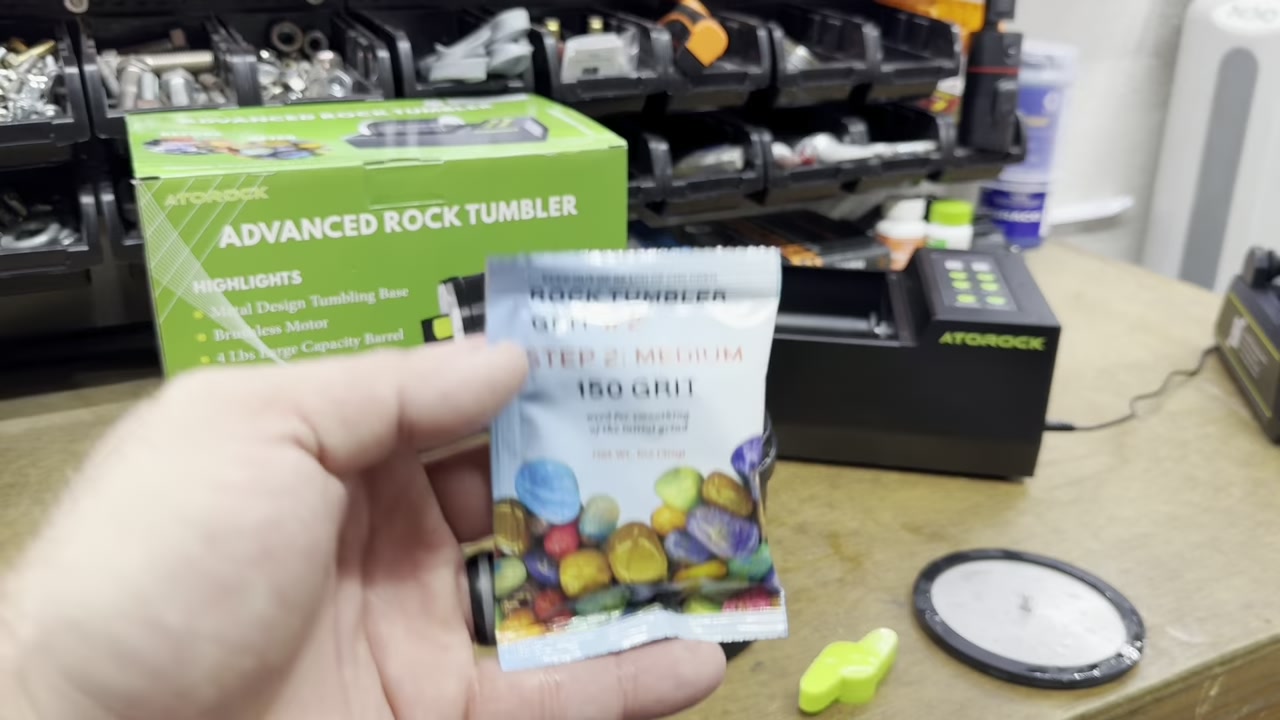
If you are tired of running tiny batches and waiting a month for a handful of polished stones, the AtoRock A1 solves that problem. The 4-pound barrel lets you process roughly 4 times what a standard 1-pound tumbler handles. That translates to real productivity gains when you have a pile of rough material to work through.
The brushless motor keeps things quiet and cool during those long 7-day grinding stages. At around $100, the price-per-pound of capacity is actually better than most smaller tumblers. You are paying $25 per pound of barrel capacity compared to $65 per pound on the National Geographic.
The only downside is size. This tumbler takes up more counter or shelf space, and you need more grit per batch. But if you are processing enough material to justify a 4-pound barrel, you have already accepted that rock tumbling is a real hobby and not just a passing interest.
Check out our guide on rock tumbler electricity costs if you are curious about what it costs to run a larger tumbler 24/7 for a month.
Who should buy this: High-volume hobbyists, rock hounds who collect rough material on trips, anyone who wants maximum output per cycle.
Best Professional Rock Tumbler: Thumler’s A-R2
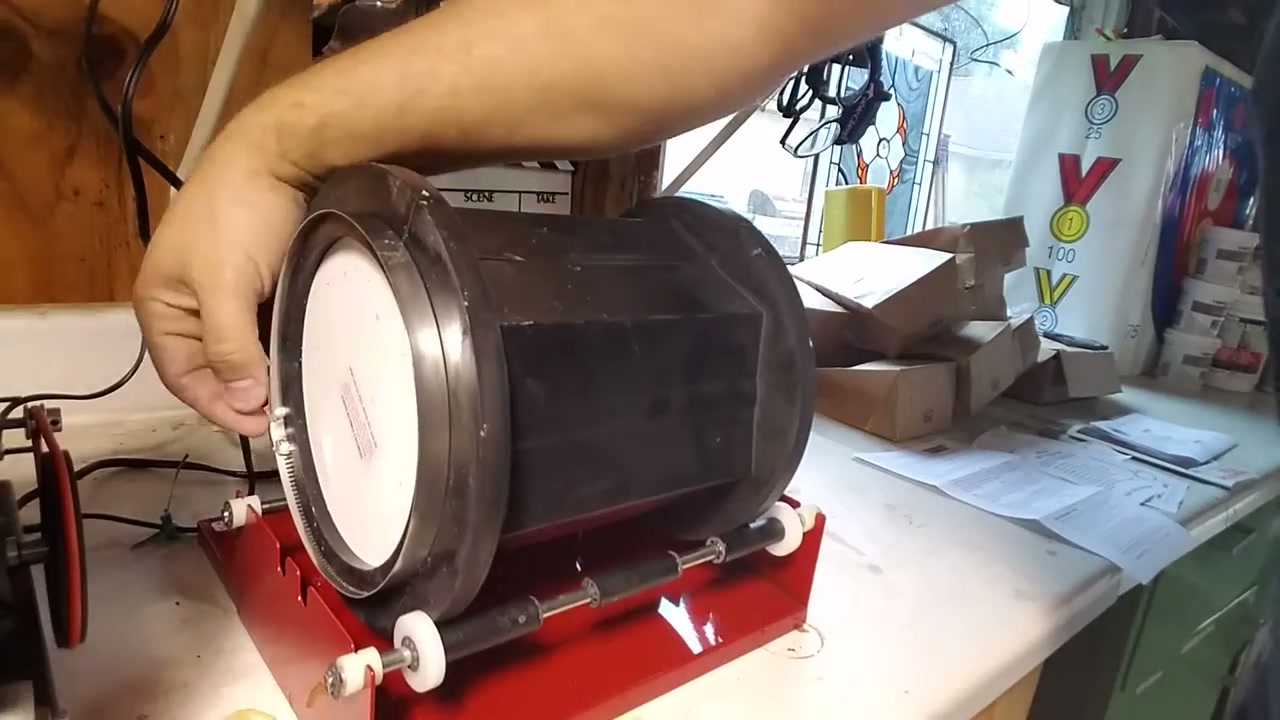
The Thumler’s A-R2 is a double-barrel machine with 6 pounds of total capacity. That means you can run two different stages simultaneously, cutting your total processing time nearly in half. While one barrel is doing coarse grind, the other can be on fine grind from a previous batch.
At $209.99, this is a serious investment. But for someone producing polished stones for craft projects, jewelry making, or even small-scale selling, the dual-barrel setup pays for itself quickly through sheer throughput.
Thumler’s has been making rock tumblers for decades and the build quality reflects that heritage. These are workhorses designed for continuous operation. The motor can handle weeks of non-stop running without complaint.
If you are at the point where you are considering a Thumler’s, you probably already have strong opinions about essential tumbling equipment. This machine rewards good technique with outstanding results.
Who should buy this: Semi-professional tumblers, jewelry makers, anyone who needs high throughput and dual-stage processing.
Honorable Mentions
A few other tumblers worth considering depending on your situation:
- National Geographic Starter Kit ($41.99) – The most affordable complete kit. Slightly smaller and simpler than the Hobby Kit, but great for kids under 10.
- Dan&Darci Advanced Professional ($79.99) – Offers pause/resume and 3-speed control in a 1-pound barrel. Nice features, but the small barrel limits its usefulness for serious work.
- KoolStone C1 (~$55) – Amazon Best Seller with a 2.5-pound barrel. Very similar to the KomeStone K1 and a solid alternative if the K1 is out of stock.
- Rebel 17 Rotary ($299.95) – A 17-pound commercial grade machine for professional lapidary work. Overkill for most hobbyists, but if you need serious capacity, nothing else on Amazon comes close.
For a broader look at options across every price point, see our top 10 rock tumblers for every budget.
What to Look for in a Rock Tumbler
Before you buy, here are the factors that actually matter:
Barrel capacity. Bigger barrels mean more polished rocks per cycle. A 1-pound barrel produces maybe 8-12 finished stones per batch. A 4-pound barrel can do 30-50. Each cycle takes the same 4 weeks regardless of barrel size, so bigger is almost always better if you have the space.
Barrel material. Rubber barrels are quieter and more durable than plastic. Every tumbler on this list uses rubber barrels. Avoid cheap plastic-barrel tumblers unless you want to listen to grinding rocks 24 hours a day.
Motor type. Brushless motors cost more but last significantly longer, run cooler, and make less noise. If you plan to tumble for years, the upfront cost of a brushless motor saves money on replacements down the road.
Noise level. All rock tumblers make noise. The question is how much. Rubber barrels and brushless motors help, but plan to keep your tumbler in a garage, basement, or laundry room. Placing it on a folded towel reduces vibration transfer.
Need help picking your first tumbler? Our guide to choosing a beginner rock tumbler walks through the decision step by step.
Rock Tumbling Tips for Better Results
Fill the barrel 2/3 to 3/4 full. Too little material and the rocks slam around instead of grinding smoothly. Too much and there is not enough room for the tumbling action to work.
Sort rocks by hardness. Mixing soft rocks with hard ones means the soft rocks get destroyed before the hard ones are even shaped. Keep stones of similar hardness together.
Upgrade your final grit. Most kits include 1000 or 1200 grit as the final polish. That produces a decent shine, but for a true mirror finish, buy 8000 grit aluminum oxide from a lapidary supplier. The difference is dramatic.
Rotary for shaping, vibratory for polishing. If you get serious about this hobby, you will eventually want both types of tumbler. Rotary tumblers round and shape rough stones. Vibratory tumblers bring out the best possible polish on already-shaped stones. Many experienced hobbyists run a rotary tumbler for the first three stages and finish in a vibratory for the final polish. For more on this topic, see our entry-level rotary tumbler comparison.
Frequently Asked Questions
How long does it take to tumble rocks?
A full rotary tumbling cycle takes about 4 weeks. Each of the four stages (coarse grind, medium grind, fine grind, and polish) runs for roughly 7 days. Vibratory tumblers can finish faster, sometimes in 1-2 weeks total.
What size rock tumbler should I get?
For beginners and kids, a 1-2 pound barrel is plenty. If you plan to tumble regularly, a 2.5-3 pound barrel saves time by processing more rocks per batch. Serious hobbyists often prefer 4+ pound barrels to maximize output.
Are rock tumblers loud?
Rubber-barreled tumblers are significantly quieter than plastic ones. Most modern hobby tumblers produce a low hum similar to a dishwasher. Placing your tumbler on a towel or rubber mat in a garage or laundry room keeps noise manageable.
Do I need to buy extra grit for my rock tumbler?
Most kits include enough grit for 1-2 batches. You will need to buy refill grit eventually. The kit grits typically only go up to 1000-1200 final polish. For a mirror finish, pick up 8000 grit aluminum oxide from a lapidary supplier.
What is the difference between a rotary and vibratory rock tumbler?
Rotary tumblers shape and smooth rocks by rolling them in a barrel with grit and water. They are better for rounding rough stones. Vibratory tumblers shake rocks rapidly and are better for polishing stones that are already shaped. Many hobbyists end up owning both.