Updated for 2026. Choosing the best rock tumbler for beginners is the most important decision you’ll make in this hobby. The wrong tumbler means noisy nights, burnt-out motors, and disappointing results. The right one turns rough rocks into polished gems you’ll be proud of for years.
We’ve tested, researched, and compared every popular beginner rock tumbler on the market to find the best rock tumbler for beginners at every price point. This guide covers what actually matters — barrel capacity, motor durability, noise level, and long-term cost of ownership — so you can pick the right machine on your first try.
Quick Picks: Best Entry-Level Tumblers at a Glance
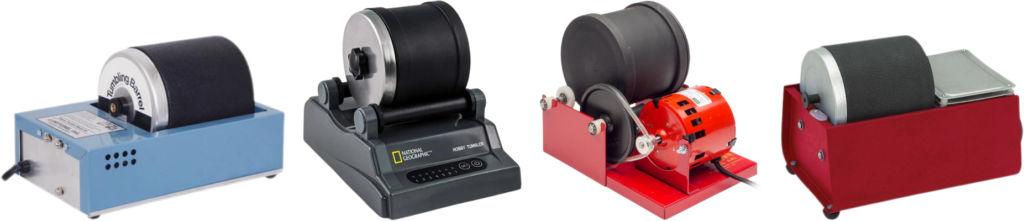
- Best Overall: Thumler’s A-R1 — Built like a tank, beautiful results, lasts for years
- Best for Beginners: National Geographic Hobby Kit — Everything included, great educational value
- Best Value for Money: Lortone 3A — Quiet, reliable, the hobbyist’s workhorse
- Best Double Barrel: Lortone 45C — Two barrels, twice the output, serious hobbyist upgrade
What to Look for in an Entry-Level Rock Tumbler
Before comparing specific models, it helps to understand the four factors that separate a good tumbler from a frustrating one:
Barrel Capacity
Measured in pounds of rock. Most entry-level tumblers hold 1-3 pounds. A 3-pound barrel is the sweet spot — large enough to tumble a meaningful batch, small enough to keep costs manageable. Remember: you need to fill the barrel 2/3 to 3/4 full for proper tumbling action, so a bigger barrel doesn’t always mean better results with small loads.
Motor Quality and Durability
Rock tumblers run 24/7 for weeks at a time. A cheap motor will overheat, slow down, or burn out mid-cycle. Look for thermally protected motors on metal frames. Plastic housings and lightweight motors are red flags for long-term durability.
Noise Level
This is the #1 complaint from new tumblers. Rotary tumblers make a constant rumbling sound — some louder than others. Rubber-lined barrels are quieter than hard plastic. If the tumbler will be in your living space, noise level should be a top priority. Many hobbyists keep their tumbler in a garage, basement, or closet with a towel underneath for sound dampening.
Kit vs. Tumbler Only
Some tumblers come as complete kits with grit, rough rock, and instructions. Others sell the machine alone. Kits are convenient for beginners, but the included grit and rock are often just enough for one batch. Either way, you’ll need to buy refill grit eventually — budget about $15-25 for a grit kit that covers all four steps.
National Geographic Hobby Rock Tumbler Kit — Best for Beginners
The National Geographic Hobby Rock Tumbler Kit is the most popular starter tumbler on Amazon, and for good reason. It comes with absolutely everything you need to go from unboxing to polished stones: the tumbler, rough rocks, a full four-step grit set, jewelry settings, and GemFoam polish.
What sets it apart is the built-in 7-day timer and the detailed learning guide. The timer is a genuinely useful feature — set it and forget it for each tumbling stage. The guide covers not just how to use the tumbler, but teaches real geology concepts, making it an excellent STEM gift for kids aged 8+.
The barrel is leak-proof with a rubber gasket seal, and the motor handles the included rocks without issue. National Geographic also backs it with a satisfaction guarantee and responsive customer support.
The honest downside: This is a starter tumbler, not a forever tumbler. The motor and barrel aren’t built to the same standard as a Lortone or Thumler’s. Some users report the motor struggling after 6-12 months of heavy use. It’s also louder than the premium options. Think of it as your “learn the hobby” machine — if you get hooked (and you probably will), you’ll want to upgrade within a year.
Capacity: ~2 lbs | Noise: Moderate-Loud | Price: $60-$70 | Includes: Complete kit with rocks, grit, jewelry settings
Lortone 3A Single Barrel Tumbler — Best Value for Money
The Lortone 3A is the tumbler that serious hobbyists recommend most often on Reddit and rock tumbling forums. Lortone has been manufacturing tumblers in the USA since 1959, and the 3A represents decades of refinement.
What makes it special is the combination of quiet operation and longevity. The rubber-barrel design significantly reduces noise — you can run this in an adjacent room without it driving you crazy. Multiple owners report running theirs for 5-10+ years with nothing more than occasional barrel replacements (about $20-30).
The 3-pound capacity hits the sweet spot for hobbyists. It’s large enough to tumble a satisfying batch of stones but small enough that you’re not spending a fortune on grit each cycle. The motor runs cool and steady, with thermal protection to prevent burnout during those long tumbling weeks.
Customer reviews are overwhelmingly positive — users consistently praise the quality of polish it produces, especially on harder stones like agate and jasper. It works beautifully for polishing sterling silver jewelry too.
The honest downside: The 3A comes as a tumbler only — no grit, no rocks, no instructions beyond the basics. You’ll need to buy a grit kit separately ($15-25). The upfront cost is higher than the National Geographic, and the 3-pound capacity may feel limiting if you want to process larger batches. But what you’re paying for is a machine that will still be running strong years from now.
Capacity: 3 lbs | Noise: Quiet | Price: $140-$180 | Includes: Tumbler only (grit sold separately)
Thumler’s A-R1 — Best Overall Entry-Level Tumbler
The Thumler’s A-R1 is our top pick for anyone who’s serious about getting into rock tumbling and wants a tumbler they won’t outgrow. Thumler’s (made by Tru-square Metal Products) builds their tumblers with a heavy-duty metal frame and a thermally protected motor that’s designed for continuous operation.
What makes it the best overall is the build quality. While the Lortone 3A is excellent, the Thumler’s A-R1 edges it out with a more robust frame and motor assembly. The soft rubber barrel produces a gentle, quiet tumbling action that delivers consistently beautiful results. The barrel seal is reliable — leaks are extremely rare with proper loading.
Available as either a tumbler-only option (~$180) or a complete kit (~$200) that includes rocks, grit, a small jewelry kit, and detailed instructions. The kit version is outstanding value — you get Thumler’s build quality plus everything you need to start.
The 3-pound barrel capacity is identical to the Lortone 3A, putting it in the same sweet-spot range. Replacement barrels and parts are readily available, and the machine is designed for easy maintenance.
The honest downside: It’s the most expensive single-barrel entry-level tumbler on this list. At $180-200, you’re paying a premium for durability. But hobbyists who’ve owned one for years consistently say it’s money well spent — this is a “buy it for life” tumbler. The only real upgrade from here is a double-barrel setup.
Capacity: 3 lbs | Noise: Quiet | Price: $180-$200 (kit ~$200) | Includes: Tumbler only or kit option
Lortone 45C Double Barrel — Best Upgrade Pick
If you already know you’re going to love this hobby — or if you want the efficiency of running two batches simultaneously — the Lortone 45C is the best value double-barrel tumbler available.
Why two barrels matter: With a single-barrel tumbler, a complete tumbling cycle takes 4-6 weeks. You’re stuck waiting through all four grit stages before you can start a new batch. With two barrels, you can stagger your batches — while barrel one is on Step 3 (pre-polish), barrel two can be on Step 1 (coarse grind). You effectively double your output without doubling your time.
You can also run different types of rock in each barrel simultaneously, or dedicate one barrel to coarse grinding and one to polishing (which helps prevent cross-contamination of grit).
The 45C shares the same legendary Lortone motor quality and quiet operation as the 3A. Each barrel holds about 1.5 lbs of rock (3 lbs total across both barrels). It’s built on a sturdy metal frame with the same thermal protection.
The honest downside: Each individual barrel is smaller than the single 3A barrel. If you want to tumble larger individual stones, the 3A’s single bigger barrel has an advantage. The price point (~$200-250) puts it in upgrade territory. And if you’re brand new, starting with a single barrel to learn the process is usually the smarter play.
Capacity: 2 x 1.5 lbs (3 lbs total) | Noise: Quiet | Price: $200-$250 | Includes: Tumbler only
Chicago Electric (Harbor Freight) — Budget Option
The Chicago Electric single drum tumbler from Harbor Freight is the cheapest rotary tumbler you’ll find from a known brand. At around $50-60, it’s tempting for anyone just wanting to dip their toes in.
We’ll be honest: this tumbler will work. It will tumble rocks and produce polished stones. But it comes with significant compromises. The motor runs hot and loud. The build quality uses more plastic than metal. The barrel seal is adequate but not as reliable as Lortone or Thumler’s.
Where it makes sense is as a pure test — if you’re not sure you’ll enjoy rock tumbling and want to spend the minimum to find out. Run one batch, see if the hobby clicks, and upgrade from there. Many experienced tumblers started with a Harbor Freight machine before moving to a Lortone or Thumler’s.
The honest downside: It’s loud. It runs hot. Parts wear out faster. You’ll likely replace it within a year if you stick with the hobby. The money you save upfront, you may spend again on a better machine down the road. If you can stretch your budget to the National Geographic kit, you’ll get a better experience.
Capacity: 3 lbs | Noise: Loud | Price: $50-$60 | Includes: Tumbler only
Side-by-Side Comparison
| Tumbler | Capacity | Noise | Kit Included? | Price Range | Best For |
|---|---|---|---|---|---|
| Thumler’s A-R1 | 3 lbs | Quiet | Kit option available | $180-$200 | Best overall |
| National Geographic Hobby | ~2 lbs | Moderate | Yes — complete | $60-$70 | Beginners & kids |
| Lortone 3A | 3 lbs | Quiet | No | $140-$180 | Best value |
| Lortone 45C | 2×1.5 lbs | Quiet | No | $200-$250 | Double barrel upgrade |
| Chicago Electric | 3 lbs | Loud | No | $50-$60 | Budget testing |
Which Tumbler Should You Actually Buy?
Here’s our honest recommendation based on who you are:
You’re buying for a kid (ages 8-14): Get the National Geographic Hobby Kit. The included rocks, grit, learning guide, and jewelry settings make it a complete experience. If they lose interest after one batch, you’re only out $60-70. If they love it, upgrade to a Lortone or Thumler’s later.
You’re an adult getting into the hobby: Start with the Lortone 3A. The quiet operation means you can actually live with it running for weeks. The build quality means you won’t be replacing it. Buy a separate grit kit and some rough rock — you’ll be tumbling beautiful stones for years to come.
You want the best, period: The Thumler’s A-R1 Kit at ~$200 gives you the most robust machine with everything included. It’s a “buy it for life” tumbler that produces consistently excellent results.
You’re already hooked and want more output: The Lortone 45C double barrel lets you stagger batches and double your output. Once you’ve run a few single-barrel cycles and know you love this hobby, the 45C is the natural next step.
You’re on a tight budget: The Chicago Electric will get you started for around $50. Just know you’ll likely upgrade within a year.
5 Tips for Your First Tumbling Batch
- Fill the barrel 2/3 to 3/4 full. Too little rock and the stones will bang against each other instead of grinding smoothly. Too much and they won’t tumble properly. Use ceramic media to fill gaps if you don’t have enough rock.
- Tumble rocks of similar hardness together. Mixing soft and hard stones means the soft ones get destroyed while the hard ones barely change. Agate with agate, jasper with jasper.
- Be patient. The full four-step process takes 4-6 weeks. Rushing through stages produces cloudy, scratched results. Each step matters.
- Clean EVERYTHING between grit stages. Even a tiny speck of coarse grit in your polish stage will scratch your stones. Rinse the barrel, the lid, the rocks, and your hands thoroughly.
- Never pour tumbling slurry down the drain. The rock dust will clog your pipes. Let the slurry settle in a bucket, pour off the water, and throw the sludge in the trash.
Frequently Asked Questions
What is the best rock tumbler for beginners?
For kids and casual beginners, the National Geographic Hobby Kit is the best choice — it includes everything you need and costs under $70. For adult hobbyists who want a tumbler that lasts, the Lortone 3A or Thumler’s A-R1 are the gold standard picks that experienced tumblers recommend most.
How much does a good rock tumbler cost?
Budget tumblers start around $50-70 (Chicago Electric, National Geographic). Quality hobby tumblers that last for years run $140-200 (Lortone 3A, Thumler’s A-R1). Double-barrel setups cost $200-270. You’ll also need grit ($15-25 per kit) and rough rock ($5-15 per pound) on top of the tumbler cost.
Is rock tumbling an expensive hobby?
Rock tumbling is one of the most affordable hobbies you can pick up. The initial investment is $60-200 for a tumbler and supplies. After that, ongoing costs are about $5-10 per batch for grit and polish. Rough rock can be collected for free on hikes or bought cheaply. Electricity costs are minimal — a tumbler uses about as much power as a light bulb.
How long does it take to tumble rocks?
A complete rotary tumbling cycle takes 4-6 weeks. The process has four stages: coarse grind (7 days), medium grind (7 days), pre-polish (7 days), and final polish (7 days). Some harder rocks may need extra time in the coarse stage. Vibratory tumblers can finish in 1-2 weeks but cost more.
Are rock tumblers loud?
It depends on the model. Budget tumblers like the Chicago Electric are noticeably loud — comparable to a dishwasher running continuously. Quality tumblers like the Lortone 3A and Thumler’s A-R1 with rubber barrels are much quieter — you can run them in an adjacent room comfortably. Placing the tumbler on a towel or rubber mat further reduces vibration noise.