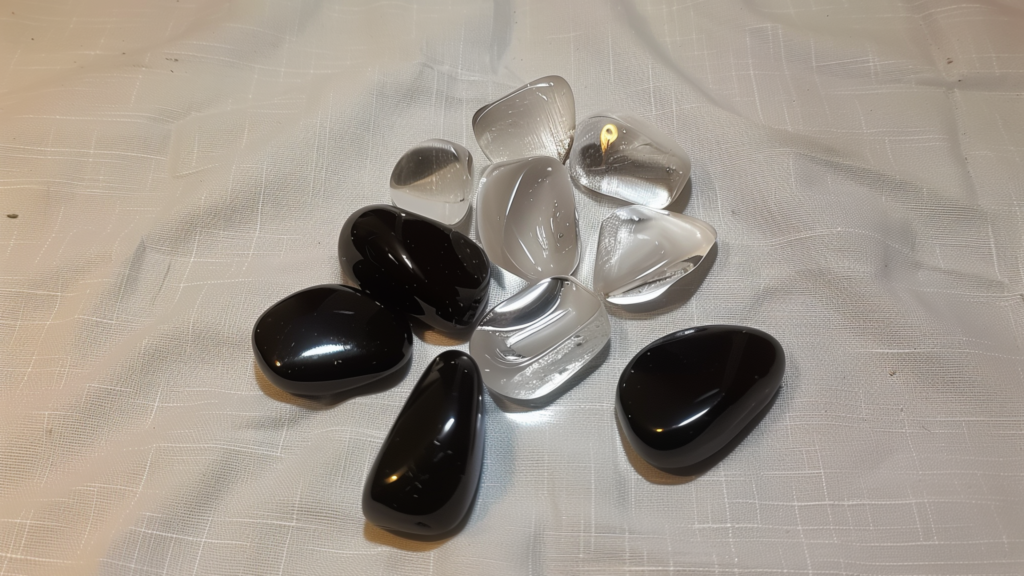
Learning how to tumble obsidian is one of the biggest challenges in rock tumbling. This volcanic glass is beautiful but notoriously tricky to polish. Obsidian and quartz both require precise handling and advanced techniques to achieve a mirror-like finish without chipping or cracking. This guide covers everything you need to know to tumble obsidian successfully, plus tips for quartz.
The Right Gear for Obsidian & Apache Tears
Volcanic glass is unforgiving — cheap media chips edges, weak motors drop rocks unevenly, and stale polish leaves a milky haze on what should be mirror-black stones. Three inputs make or break the result:
- Plastic pellets or small ceramic media — cushions obsidian’s brittle edges during coarse and medium stages. See tested media picks (and why plastic beats ceramic here)
- Fine grit and a proper polish compound — cerium oxide or TXP for that mirror finish obsidian is famous for. Tested compound picks with Amazon prices
- A quiet, smooth-running rotary tumbler — vibration stresses brittle volcanic glass. Top 10 tested rotary tumblers
Understanding Obsidian and Quartz
Before we explore the techniques, it’s crucial to understand what makes obsidian and quartz challenging:
- Obsidian is naturally occurring volcanic glass with a Mohs hardness rating of 5 to 6. Its brittle nature means it’s prone to chipping and requires a gentle tumbling process.
- Quartz, on the other hand, rates a 7 on the Mohs hardness scale, making it durable but also susceptible to cracking if not handled properly. Its hardness also means it takes longer to polish.
Preparing for the Tumble
Selecting Your Stones
For both obsidian and quartz, start by choosing pieces without visible cracks or fractures. These imperfections can lead to breakage during tumbling.
Cleaning the Stones
Thoroughly clean all stones to remove dirt and debris that could interfere with the tumbling process.
Tumbling Techniques for Success
1. Start with a Soft Touch
- Obsidian: Begin with a very fine grit, as starting too coarse can result in chips and scratches.
- Quartz: While more resilient, starting with a medium-fine grit can prevent potential damage from too abrasive a beginning.
2. Gradual Grit Progression
Slowly work your way through the grits, spending ample time at each stage. For obsidian and quartz, patience is key—rushing the process can result in subpar polish or damaged stones.
3. Use Plastic Pellets
Including plastic pellets in your tumbler acts as a cushion for the stones, reducing the chance of chipping. This is particularly beneficial for obsidian.
4. Long Polish Cycles
Both obsidian and quartz benefit from extended polish cycles. Allow them to polish for a week or more, ensuring the finest possible finish.
5. Cold Water Rinse Between Stages
Rinsing stones with cold water between stages can help prevent thermal shock, especially important for temperature-sensitive stones like obsidian.
Advanced Tips
Adjust Barrel Load
A half-full barrel provides the best tumbling action. For these particular stones, consider tumbling fewer pieces at once, giving them plenty of room to move without impacting each other harshly.
Temperature and Humidity Considerations
Keep your tumbler in an environment with stable temperature and humidity. Fluctuations can affect the tumbling process, impacting the quality of the polish.
Monitoring Progress
Regularly check the progress of your stones, especially when transitioning to finer grits. This allows you to adjust the process as needed, ensuring the best outcome.
Apache Tears: Obsidian That’s Half-Tumbled by Nature
Apache tears are small, rounded obsidian nodules found in volcanic ash deposits — mostly in Arizona, New Mexico, and Nevada. Because they’ve already been weathered and rolled by natural erosion for thousands of years, they’re easier to tumble than raw obsidian chunks. If you’re new to tumbling volcanic glass, Apache tears are the ideal place to start.
Why Apache tears are beginner-friendly
- Already shaped — natural weathering has removed sharp edges and most thin, fracture-prone protrusions. You skip the aggressive stage 1 coarse grind that cracks most obsidian.
- Consistent size — most Apache tears come in 15–25mm diameter, which tumbles evenly without the load imbalance that breaks larger obsidian pieces.
- Translucent when polished — held up to light, a polished Apache tear glows deep red or brown around the edges. That reveal is the payoff, and it’s why they’re a favorite for jewelry makers.
A shortened tumbling schedule for Apache tears
- Skip stage 1 entirely — or run coarse for only 2–3 days if there are visible sharp edges. Most Apache tears are already shaped.
- Stage 2 (medium, 120/220): 5–7 days. Start here for nearly all Apache tears.
- Stage 3 (pre-polish, 500/600): 5–7 days.
- Stage 4 (polish — cerium oxide or TXP): 7–10 days. Run longer for glassier finish.
Always use plastic pellets or small-grade ceramic media as cushion. Apache tears have internal stress fractures from their volcanic origin — aggressive tumbling finds them and splits the stone.
Other obsidian varieties worth knowing
- Snowflake obsidian — black obsidian with white cristobalite inclusions. Tumbles similarly to regular obsidian; the white “snowflakes” polish at a different rate than the matrix, creating subtle surface texture that’s actually desirable.
- Mahogany obsidian — brown-red banded obsidian. Slightly harder and less brittle than pure black obsidian. Tumbles beautifully.
- Rainbow obsidian — shows iridescent sheen when polished. Requires extra-long polish stage (10+ days) to bring out the sheen fully.
Conclusion
Tumbling difficult stones like obsidian and quartz requires a blend of patience, precision, and a willingness to adapt techniques as needed. By following these tailored approaches, enthusiasts can overcome the challenges presented by these materials, resulting in beautifully polished stones that highlight their natural beauty. Remember, each stone is unique, and part of the joy of rock tumbling is discovering the optimal approach for each batch. Happy tumbling!
Frequently Asked Questions
Can you tumble obsidian in a rock tumbler?
Yes, but obsidian requires modified techniques. It’s softer (5-5.5 Mohs) and prone to chipping. Use shorter coarse grind times, extra ceramic media for cushioning, and check frequently for fractures.
How long does it take to tumble obsidian?
About 4-6 weeks total. Stage 1 takes 5-7 days (shorter than harder stones), stages 2-4 take 7 days each. Obsidian polishes faster than agate due to its lower hardness.
Can you tumble quartz crystals?
Yes, but avoid tumbling pointed crystal specimens as the points will break off. Massive quartz and rose quartz tumble well. Use standard 4-stage grit process with 7-10 days per stage.
For tumbler recommendations, see our best rock tumblers in 2026.